Close Menu
All About Ultras
  • News
  • Races
  • Nutrition
  • Culture
  • Tools
    • UTMB Ballot Calculator

Subscribe to Updates

Subscribe to our newsletter and stay updated with the latest news and exclusive offers.

What's Hot

Trail Running Breakthroughs: New Gear Elevates 100K and 100-Mile Races

January 31, 2026

The Fine Line Between Strava Rivalry and Harassment: A Runner’s Obsession to Erase a Competitor

January 31, 2026

Thousands Join 2026 Colchester Half Marathon to Support Local Cancer Fighters

January 31, 2026
Facebook X (Twitter) Instagram
All About Ultras
Login
  • News

    Trail Running Breakthroughs: New Gear Elevates 100K and 100-Mile Races

    January 31, 2026

    Trail Running Revolution: New Gear Innovations Boost 100-Mile Race Performance

    January 30, 2026

    Trail Running Takes Center Stage: New Gear and UTMB Qualifiers Announced!

    January 29, 2026

    Trail Running Thrills: New Gear Boosts Performance at UTMB Qualifiers

    January 28, 2026

    Trail Running Revolution: New Gear Boosts Performance in UTMB Qualifiers!

    January 27, 2026
  • Races

    The Fine Line Between Strava Rivalry and Harassment: A Runner’s Obsession to Erase a Competitor

    January 31, 2026

    Snowdrop 55 Hour Ultra Race: Honoring Chelsey Campbell’s Legacy and Supporting Pediatric Cancer Survivors

    January 30, 2026

    Comprehensive Review of the Kiprun 10L Running Vest: Versatile and Efficient for Trail Adventures

    January 29, 2026

    Register Now for the Griffith Park Run Half Marathon and 5K on February 1st to Support Los Angeles Parks

    January 28, 2026

    Ironman Increases Draft Zone for Pro Athletes from 12 to 20 Meters, Enhancing Race Dynamics with RaceRanger Technology

    January 27, 2026
  • Nutrition

    Endurance Athlete’s Journey: Resilience Through Ulnar Collateral Ligament Recovery

    January 29, 2026

    Endurance and Resilience: How Vitamin D Fuels Ultramarathon Success

    January 27, 2026

    Resilient Recovery: 4 Endurance Strategies for Overcoming Patellofemoral Pain

    January 23, 2026

    Beyond Prostatectomy: Endurance Athletes’ Journey to Recovery and Performance

    January 16, 2026

    Endurance Athlete’s Resilience: Overcoming Hamstring T-Junction Injuries in Ultramarathon Training

    January 8, 2026
  • Culture

    Thousands Join 2026 Colchester Half Marathon to Support Local Cancer Fighters

    January 31, 2026

    Paralyzed Runner Tackles 50-Mile Race in Stunning Mountain Journey for Hope

    January 29, 2026

    From Captivity to Champion: Survivor Shatters Ultramarathon Record in Endurance Race

    January 27, 2026

    Canadian ultrarunner breastfeeds baby en route to 100-km victory in stunning race

    January 25, 2026

    Daughter of Gosport Dad Lost to Brain Cancer Runs London Marathon Challenge

    January 23, 2026
  • Tools
    • UTMB Ballot Calculator
All About Ultras
Home»Nutrition»"Unleashing Resilience: Endurance Athletes Triumph Through Fat Metabolism Mastery"
Nutrition

"Unleashing Resilience: Endurance Athletes Triumph Through Fat Metabolism Mastery"

Staff WriterBy Staff WriterMay 14, 2025No Comments4 Mins Read
"unleashing Resilience: Endurance Athletes Triumph Through Fat Metabolism Mastery"
Share
Facebook Twitter Reddit Telegram Pinterest Email

Endurance athletes often hear the notion of “switching” between fuel sources during exercise, particularly when discussing carbohydrate and fat metabolism. This concept can lead to misunderstandings about how our body utilizes different energy pathways and how those pathways affect performance, particularly during extended efforts in demanding conditions.

When we engage in endurance activities, our muscles require adenosine triphosphate (ATP) for contraction, with stored ATP being minimal and rapidly depleted. Consequently, our body relies on four primary energy systems to regenerate ATP: glycolysis, aerobic metabolism, and two forms of oxidative phosphorylation. Each of these systems operates concurrently but varies in speed and capacity depending on the exercise intensity. Glycolysis, often mistakenly considered an anaerobic process, is intricately linked to oxygen availability and primarily functions to break down carbohydrates. This is especially relevant as intensity increases, prompting a rise in ATP demand and a corresponding acceleration in glycolysis, which ushers in more rapid carbohydrate utilization.

As exercise intensity escalates, ATP levels might not drop significantly; however, the balance between ATP and its breakdown products—adenosine diphosphate (ADP) and adenosine monophosphate (AMP)—changes. This shift signals the body to enhance energy production, often leading to an increase in pyruvate, a key intermediary in carbohydrate metabolism. However, should the production of pyruvate outpace its utilization, it is converted into lactic acid, which serves to regulate pyruvate levels and maintain glycolysis efficiency—even if lactic acid accumulation might eventually lead to muscle fatigue and discomfort.

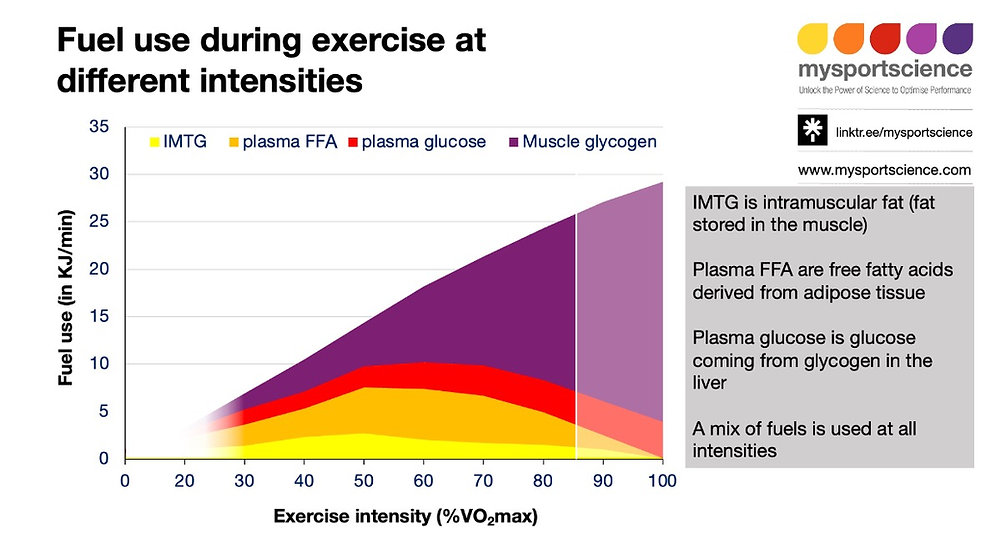
At the mitochondrial level, aerobic metabolism is driven by acetyl-CoA, which can be derived from both carbohydrates and fats. This is where misconceptions about a metabolic “switch” arise. Both pathways remain active, continuously producing acetyl-CoA, negating the idea that we can simply toggle between burning fat and carbohydrates. Instead, the intensity of exercise dictates the degree to which each fuel source is utilized. During steady, moderate intensity, fat oxidation levels are higher, and as intensity intensifies, carbohydrate metabolism takes precedence, showcasing the dynamic nature of these energy systems rather than a simple switch mechanism.

For endurance athletes, timing and type of nutrition intake become paramount. As exercise demands increase, so does the necessity for immediate carbohydrate availability, which can typically be supplied by muscle glycogen—the most accessible energy source. Nutrition timing plays a critical role in ensuring that muscle glycogen stores are adequately filled pre-race and strategically replenished during long-duration events to sustain performance. With this in mind, athletes should prioritize consuming carbohydrates in the hours leading up to competition to maximize glycogen storage. However, during prolonged efforts, a continuous supply of carbohydrates throughout the event is most effective. The capacity to tolerate these carbohydrates can significantly influence performance; thus, testing various fueling strategies during training to ascertain individual tolerance and preferences is crucial.

Hydration also plays a complex role in endurance events. An athlete’s ability to maintain fluid balance is directly linked to performance, especially in challenging conditions where sweat loss can be substantial. The right hydration strategy involves not only water but also electrolytes to replace minerals lost through sweat. Tailoring hydration strategies according to weather conditions, exertion level, and individual sweat rates can help in optimizing performance and recovery.

The intersection of metabolic efficiency and fuel utilization comes into play as well. Athlete adaptation through training can enhance fat oxidation, allowing for a greater proportion of energy to be derived from fat during sustained efforts. This adaptation is particularly advantageous because muscle glycogen is a limited resource and tends to be the primary energy source used during higher intensities. Therefore, including long, steady-state efforts in training, designed particularly for optimizing fat utilization, can improve metabolic efficiency and delay fatigue during races.

Recovery strategies also warrant attention. Post-exercise, the focus should be on restoring glycogen stores effectively. Consuming carbohydrates paired with protein soon after training can accelerate glycogen resynthesis, while also aiding muscle repair. This dual approach emphasizes that recovery is not merely a single event but should be a comprehensive strategy that accounts for various physiological needs.

Finally, it’s essential to critically evaluate supplements that claim to improve performance. In a disciplined training regime, the right supplements—like branch-chain amino acids (BCAAs) or specific carbohydrates—can supplement performance, stimulate recovery, or support muscle repair, provided they complement a well-rounded diet.

In conclusion, endurance athletes must understand that rather than switching from one fuel source to another, both carbohydrates and fats are continuously utilized, with their contributions varying based on exercise intensity and duration. A nuanced grasp of nutrition timing, hydration strategies, metabolic efficiency, and recovery tactics is essential for optimizing endurance performance. All these factors converge to protect muscle glycogen and improve an athlete’s capacity to perform under demanding physical conditions. A practical takeaway for athletes is to test and refine fueling strategies during training, ensuring they can effectively maintain energy levels and performance throughout long-duration events.

Athletes Endurance Fat Masteryquotstrongp Metabolism pstrongquotUnleashing Resilience Triumph
Share. Facebook Twitter Pinterest LinkedIn Telegram Reddit Email
Previous ArticleParalyzed Runner Shatters Record in Controversial Ultra Marathon Amid Doping Debate
Next Article Trail Running Revolution: New Gear Boosts Performance in Upcoming UTMB Qualifiers
karan.kanishk
Staff Writer
  • Website

Related Posts

Endurance Athlete’s Journey: Resilience Through Ulnar Collateral Ligament Recovery

January 29, 2026

Ironman Increases Draft Zone for Pro Athletes from 12 to 20 Meters, Enhancing Race Dynamics with RaceRanger Technology

January 27, 2026

From Captivity to Champion: Survivor Shatters Ultramarathon Record in Endurance Race

January 27, 2026

Endurance and Resilience: How Vitamin D Fuels Ultramarathon Success

January 27, 2026

Trail Running Triumph: New 100K Races Elevate UTMB Qualifiers Worldwide

January 24, 2026

Resilient Recovery: 4 Endurance Strategies for Overcoming Patellofemoral Pain

January 23, 2026
Add A Comment
Leave A Reply Cancel Reply

Stay In Touch
Don't Miss

Trail Running Breakthroughs: New Gear Elevates 100K and 100-Mile Races

By Staff WriterJanuary 31, 2026

As February kicks off, the North American ultramarathon calendar sees a notable density of events,…

The Fine Line Between Strava Rivalry and Harassment: A Runner’s Obsession to Erase a Competitor

January 31, 2026

Thousands Join 2026 Colchester Half Marathon to Support Local Cancer Fighters

January 31, 2026

Trail Running Revolution: New Gear Innovations Boost 100-Mile Race Performance

January 30, 2026

Subscribe to Updates

Subscribe to our newsletter and stay updated with the latest news and exclusive offers.

About Us
About Us

Welcome to All About Ultras, your ultimate destination for everything related to endurance sports, with a special focus on running. Whether you're a seasoned ultra marathoner, a weekend warrior, or just starting your journey into long-distance running, we are here to inspire, inform, and support you.

Our Picks

Trail Running Revolution: New Gear Innovations Boost 100-Mile Race Performance

January 30, 2026

Snowdrop 55 Hour Ultra Race: Honoring Chelsey Campbell’s Legacy and Supporting Pediatric Cancer Survivors

January 30, 2026

Trail Running Takes Center Stage: New Gear and UTMB Qualifiers Announced!

January 29, 2026
New Comments
    • About Us
    • Contact Us
    • Privacy Policy
    • Terms and Conditions
    • Disclaimer
    © 2026 All About Ultras. All Rights Reserved.

    Type above and press Enter to search. Press Esc to cancel.

    Sign In or Register

    Welcome Back!

    Login to your account below.

    Lost password?