


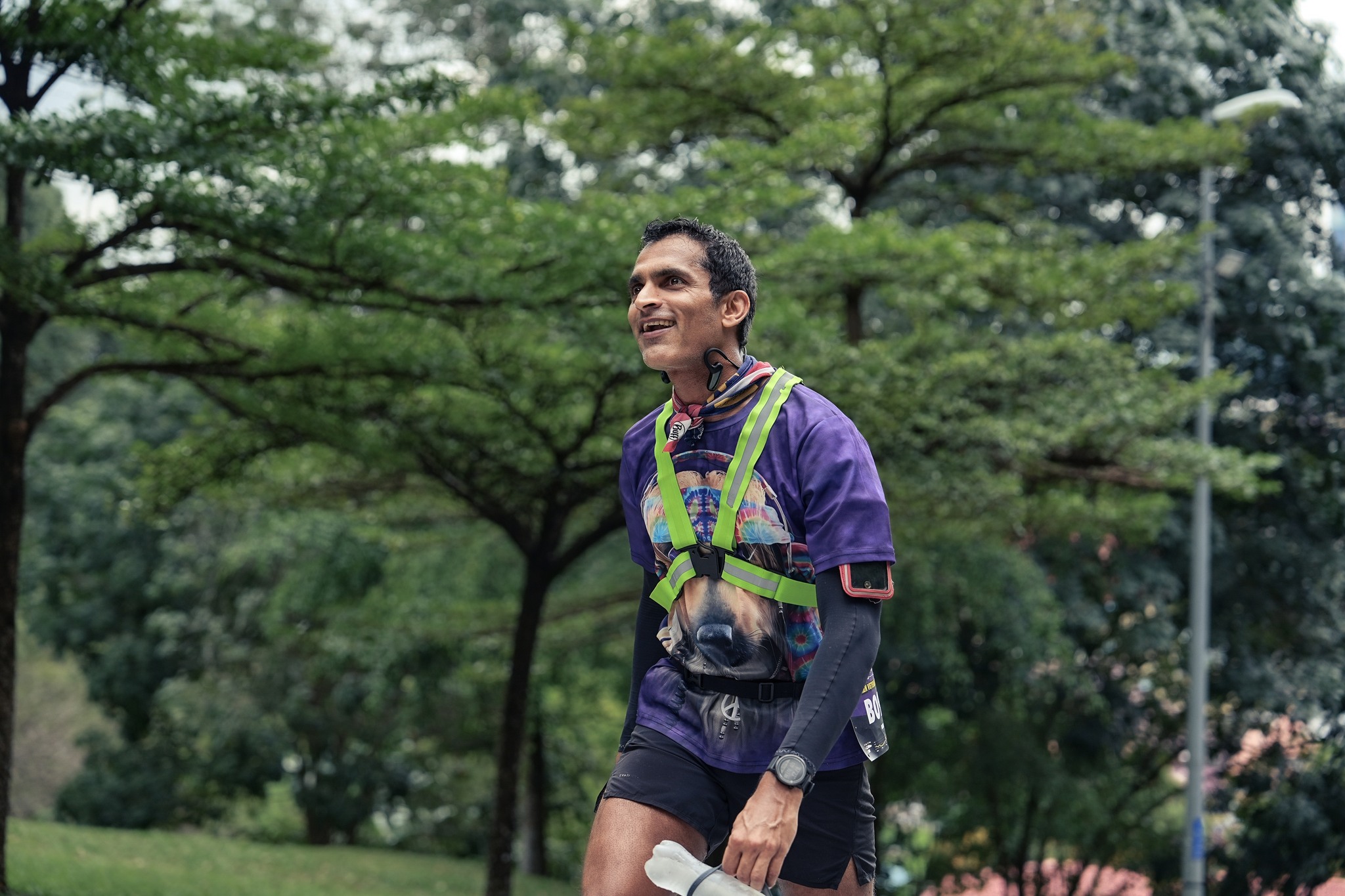
David Christopher’s recent accomplishment of completing a 400 KM ultramarathon serves as a profound illustration of the physical and mental resilience inherent in endurance sports. As seasoned athletes understand, endurance isn’t simply about the hours spent on the trail; it’s an intricate dance of pacing, mental fortitude, and an unwavering sense of purpose.
When David undertook this monumental challenge, his aim transcended personal achievement. His commitment to raising over RM130,000 for the welfare of stray animals revealed a decision founded in shared responsibility — a recognition that athletes can indeed leverage their unique pursuits for broader social impact. This philosophy becomes evident in endurance sports, where the commitment to a cause can fuel motivation, especially during the most arduous moments.
The ultramarathon ran through some challenging terrains in Malaysia, with a total elevation gain of 6114 meters. For experienced athletes, the ability to navigate such gradients while maintaining a strategic approach to pace is essential. Pacing isn’t merely a technique; it’s a mindset. An effective endurance athlete must constantly weigh the trade-offs between speed and sustainability, understanding when to push harder and when to hold back. David’s performance over the 65 hours reflects this thought process clearly. While he completed the race in a time of 65 hours, 33 minutes, the plan was at once practical in racing strategy and rooted in self-awareness. This balance between knowing one’s limits and striving for them is what makes endurance running both a test of physical capability and a demonstration of grit.
Motivation in endurance sports often stems from intrinsic factors, but external ones can galvanize action, as demonstrated by the structure of David’s fundraising campaign. Donors pledged to increase their contributions based on his performance, allowing those funds to develop not just enthusiasm for the cause, but an added layer of incentive. Each kilometer therefore became a calculation of purpose — with every stride taken being one less mile between stray animals and a potential future of care and stability. For many athletes, understanding the psychological mechanisms of motivation in a long-distance race can contribute to greater efficacy in training and performance. David’s challenge highlights the synergy between personal goals and altruistic pursuits, emphasizing a nuanced source of resilience that is not just about beating a clock but rather running for something greater.
The reality of ultrarunning often includes moments of physical breakdown. David encountered significant exhaustion and dehydration, necessitating micro-naps during the race. This decision reflects an understanding of recovery, an essential but often overlooked aspect of endurance. It reminds us that fatigue is not a weakness; rather, it is a state to be managed and integrated into a training regimen. Athletes have the responsibility to listen to their bodies, even during monumental challenges. When David acknowledged his physical needs while remaining steadfast in his objectives, he showcased the essence of adaptability. Each athlete’s journey, marked by peaks and valleys, necessitates a similar approach to training and racing — learning to push while recognizing boundaries.
Yet, completing the ultramarathon was only part of David’s story. After crossing the finish line, he realized the course had not quite met the intended 400 KM. His response was not to accept the distance, but to run an additional 100 KM just days later. This decision is emblematic of the endurance mindset: a commitment to one’s goals that transcends simple completion. It reflects the continual pursuit of excellence, a trait deeply ingrained in every seasoned endurance athlete. His determination to achieve this distance speaks to the necessity of closing perceived gaps. For many, the completion of physical objectives is as much about satisfying personal standards as it is about meeting external expectations.
The additional run, culminating in another 13 hours and 47 minutes, wasn’t merely about enhancing his total distance. It resonated with a deeper commitment to the cause he supported and showcased the cumulative nature of resilient training. Every step taken can be seen as a building block — not just for this endeavor, but for future races and challenges. In a world where timing and performance metrics often dominate the conversation, David’s journey reminds athletes that every run contributes to an ongoing evolution, both personally and socially.
As part of the endurance community, we often grapple with our own limiting beliefs derived from past experiences, injuries, or mental barriers. David’s successful navigation through a grueling become an extensive journey proves that the intersection of passion and purpose can lead to exceptional outcomes. Yet, it’s the quiet moments — the painstaking evaluations of pacing, the countless hours of training, the recovery strategies that get overlooked — that truly build endurance.
Ultimately, David Christopher’s remarkable achievement can serve as a reminder that in our pursuit of personal goals, we can intrinsically connect with broader communities. It’s not merely about finishing a race; it’s about what we do in the pursuit of that finish line that matters. The takeaway for every athlete is this: in the next long session, consider not only the kilometers ahead but also the deeper significance behind them. The reason we run often brings clarity and strength, reminding us that every mile carries the power to create lasting change, both within ourselves and for those we aim to support.
