


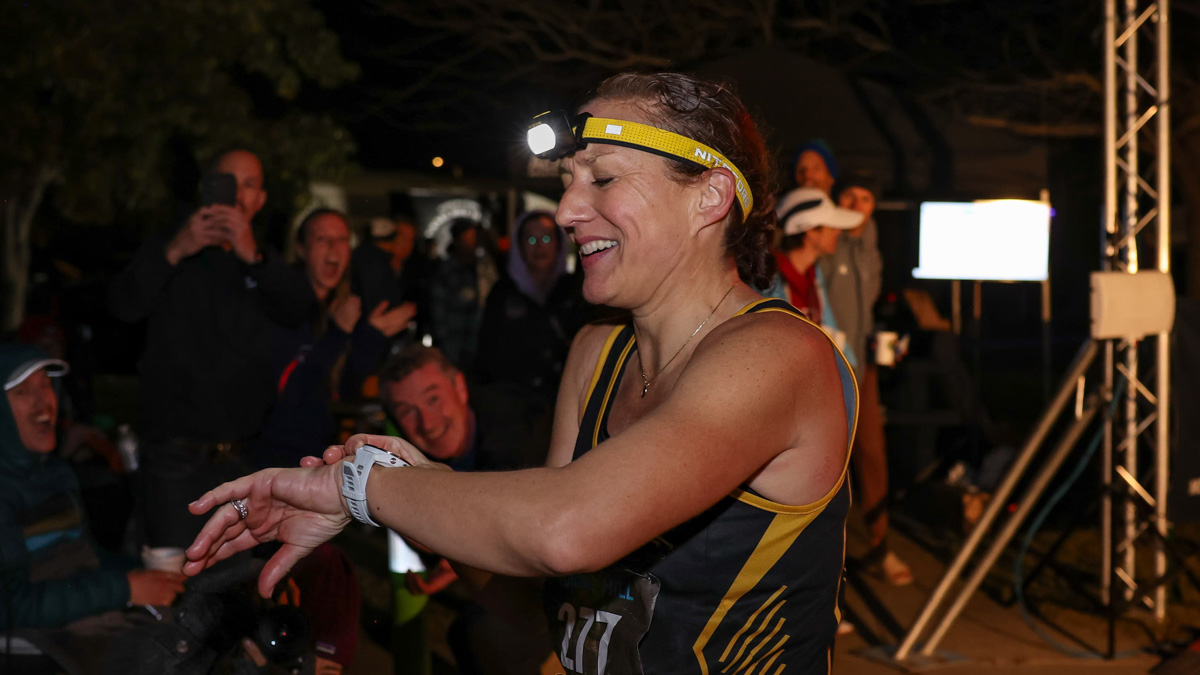
Caitriona Jennings, an accomplished ultrarunner from Ireland, recently set a new women’s 100-mile world record at the Tunnel Hill 100 Mile, clocking in at 12:37:04. This performance is notable not just for its record-breaking nature but also for Jennings’s approach and the strategic decisions she made leading up to and during the race. Transitioning from a strong background in shorter ultramarathon distances, including the 50k, 50-mile, and 100k, Jennings’s move to the 100-mile distance was methodical and well-considered.
Having previously competed successfully at events like the Comrades Marathon and represented Ireland in various international championships, her shift toward 100 miles came after a period of reflection. Following her strong finish at Comrades, Jennings decided to challenge herself further. The allure of the 100-mile distance was not just about reaching a new milestone; it also represented an opportunity to explore the limits of her physical and mental endurance. Jennings expressed that selecting the Tunnel Hill course was strategic, given its flat terrain and reputation for fast times, allowing her to focus on pacing rather than navigating challenging elevation changes.
In her training leading up to the race, Jennings adapted her approach significantly. She ramped up her weekly mileage and increased the duration of her long runs, ensuring she was conditioned for the sustained effort required over the 100-mile distance. By building up to runs of six to eight hours cumulatively over weekends, she aimed to prepare her legs for the repetitive impact of long distances, emphasizing the importance of getting comfortable with extended durations on her feet. This preparation is critical for any ultrarunner considering a distance beyond their usual limitations, as it addresses not only physical stamina but also mental resilience.
When it came to race day, Jennings had established clear objectives, categorizing them into three tiers: the world record as her A goal, the Irish women’s record as her C goal, and competitive times for men’s records as intermediate targets. This strategic goal-setting allowed her to maintain perspective during the race, which is essential in any ultramarathon scenario where conditions can shift dramatically.
During the race, she executed her pacing plan effectively, maintaining a steady rhythm for the first 80 miles despite her initial intent to adopt a more conservative start. Jennings’s willingness to adapt her pacing based on how her body felt underscores an important tactic for ultrarunners, particularly those new to longer distances: listen to your body. She reported finding a comfortable pace that felt right rather than strictly adhering to her predetermined strategy, a decision aided by her comprehensive pre-race training and Body Awareness.
As fatigue began to set in around the 50-mile mark, Jennings noted a crucial turning point in the race: the loneliness of the course during the second loop became more pronounced. It was during these stretches, where support became sparse, that mental fortitude played a significant role. Keeping positive, acknowledging the impending challenge rather than shying away from it, enabled her to maintain momentum, an insight that can serve as a vital lesson for ultrarunners preparing for races with less crowd support or in more isolated environments.
The latter stages of the race demanded not just physical strength but a significant psychological component. Jennings illustrated the importance of adaptability—recognizing when to push through discomfort and when to reassess pacing. Her realization that she could likely secure the record with just under three miles to go encapsulates the uncertainty inherent in the 100-mile distance, where runners must often balance pushing their limits with the risk of burning out before reaching the finish line.
Crossing the finish line, Jennings experienced an emotional culmination of her preparation and tactical decisions, validating her capacity to not only complete the distance but to set a new benchmark in the sport. Her admiration for Camille Herron, the previous record holder, reflected the competitive yet respectful spirit prevalent in the ultra community, where performance records push the boundaries of what is considered achievable.
For experienced trail and ultrarunners, whether preparing for a race like UTMB or testing their boundaries in new challenges, Jennings’s performance highlights several key elements to keep in mind. Pacing, training specificity, mental resilience, and the ability to adapt to the dynamics of race day conditions are critical factors that contribute to successful performances.
A practical takeaway for runners is the significance of flexible pacing strategies—understanding that sticking rigidly to planned paces may not always serve best when fatigue sets in or race conditions become unpredictable. Instead, building a robust body awareness and readiness to adjust based on real-time feedback can optimize performance and enhance overall race experience.
