


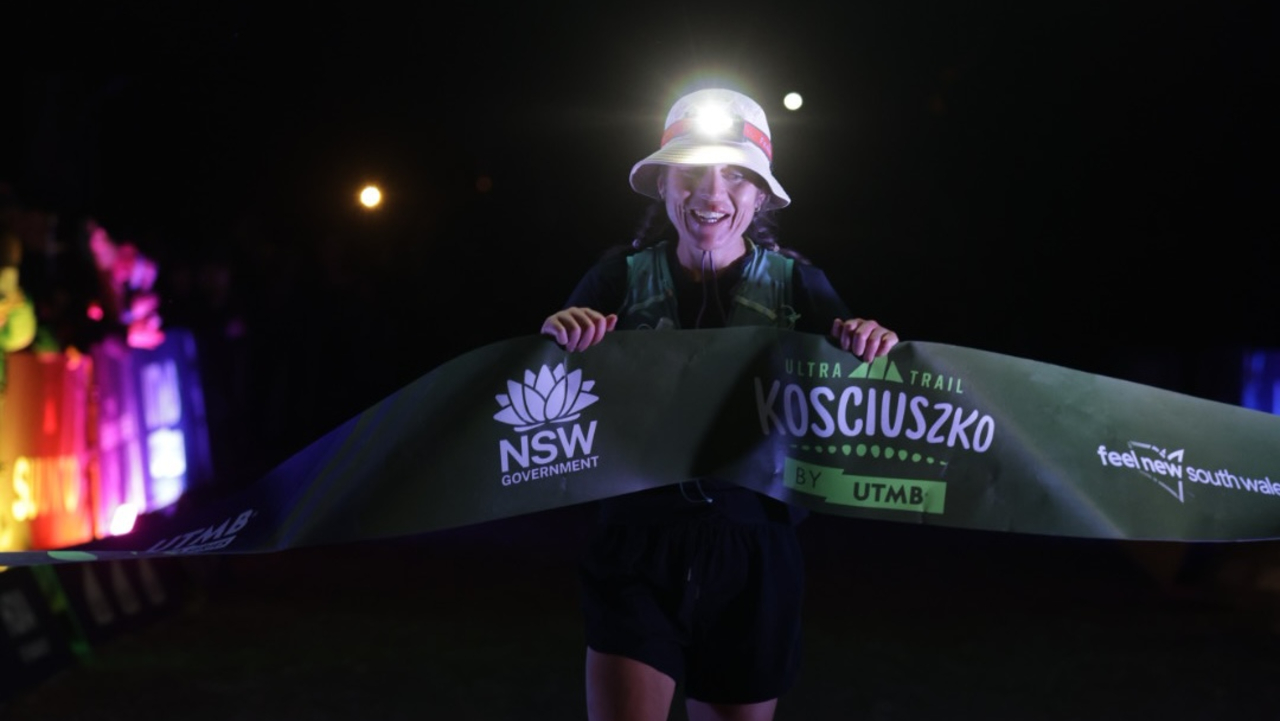
The recent Ultra-Trail Kosciuszko by UTMB in the Snowy Mountains of New South Wales showcased significant performances from a diverse field of seasoned ultrarunners, providing insights into effective racing strategies and pacing decisions that can inform the training and preparation of athletes vying for competitive placements in mountain ultras.
Stephanie Auston from Australia and Morgan Glazier of Great Britain captured the women’s and men’s 100-mile titles, respectively, both achieving significant personal milestones in the highly competitive event. For Auston, who had twice finished as the runner-up in past editions of the KosciMiler, this victory was a culmination of persistent dedication to her training regime. She finished the race in 19:45:57, over three hours ahead of her nearest competitor. Auston emphasized the importance of pacing early in the race while maintaining awareness of her surroundings and the course conditions. Her strategy involved extending her lead while managing her energy reserves, which is particularly crucial in ultra-distance races. Given the natural variability of mountain courses, adaptations in strategy based on ongoing conditions are paramount; Auston’s ability to execute her pacing plan effectively was critical in achieving her victory.
In contrasting performance, Glazier, who won the men’s 100-mile event in 17:38:25, demonstrated the calculated risk of a more aggressive pacing strategy. By positioning himself within the leading group through the first half of the race, he awaited the optimal moment to push ahead, taking the lead at the 107km mark. His insights during post-race interviews highlighted the mental aspect of ultrarunning, noting that maintaining a positive outlook and visualizing success can contribute to endurance during later, more physically taxing portions of the race. Managing fatigue and mental fortitude in those closing kilometers is a lesson for ultrarunners preparing for long endurance challenges.
The 100km race also delivered noteworthy performances, with Sophie Broome from Great Britain securing first place in 11:58:10. Her approach emphasized the tactical use of terrain — maintaining a controlled speed early on to save energy for the more demanding sections of the course. Broome’s experience in balancing effort against elevation changes provides a critical reminder for ultrarunners: understanding the specific challenges of the course and training appropriately can yield substantial benefits on race day.
Loris Lassere, the men’s 100km champion from France, exhibited similar tactical awareness. As the top-ranked runner in the Kosci100 field, he faced challenges but successfully managed to outpace his competitors primarily through a strategy of sustained effort rather than surges. His experience accentuates the importance of maintaining a consistent pace through varied terrain to stave off fatigue, reinforcing a key lesson for runners regarding energy distribution over long mountain courses.
In the 50km race, both Michael Dimuantes and Andrea Kolbeinsdottir emerged as champions in their respective categories. Dimuantes finished in 4:04:08, employing a front-running strategy that allowed him to leverage his local knowledge of the course. The tactical decision to maintain control and listen to his body throughout the race paid dividends, as it enabled him to finish strong despite experiencing fatigue in the last kilometers. Kolbeinsdottir also demonstrated impressive pacing, securing her victory in 4:24:48, showcasing how critical it is to have an adaptive race plan that aligns with one’s strengths while being responsive to the demands of the course.
Overall, the Ultra-Trail Kosciuszko revealed valuable lessons in pacing and energy management applicable to any distance of mountain racing. The performances from Auston, Glazier, Broome, Lassere, and others illustrate that successful ultrarunning hinges on a combination of strategic pacing, mental endurance, and an intimate understanding of course dynamics.
As athletes prepare for similar mountain ultramarathons, whether seeking out UTMB qualification slots or competing against experienced fields, a key takeaway emerges: effectively managing race strategy requires both a deep understanding of personal capabilities and an adaptive approach to the unique challenges presented by each course. Be prepared to adjust your race plan based on current performance and environmental factors. In the long game of ultrarunning, those who can maintain this flexibility while harnessing their experience will likely find themselves at the front of the pack.
