


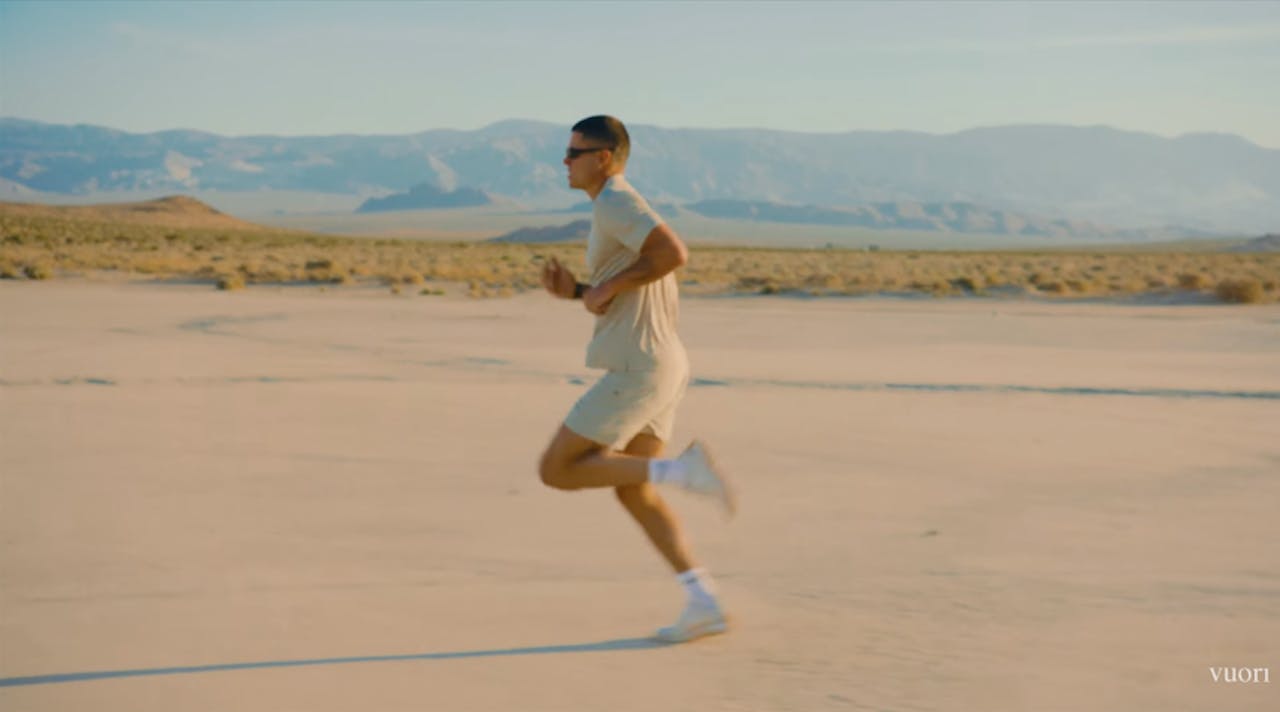
In the latest offering from Vuori’s ‘Body Follows the Mind’ campaign, we are introduced to William Goodge, a figure whose journey resonates deeply with experienced endurance athletes. His narrative isn’t merely about the impressive 3,064 miles he covered across the United States in 55 days. It’s a story that penetrates the emotional fabric of endurance sports—an exploration of mental fortitude and the nuanced relationship between grief and resilience.
Filmed against the striking backdrop of Joshua Tree, California, the short film dives into the emotional undercurrents of Goodge’s ultra-running adventure. For many endurance athletes, the road is often paved with personal trials and tribulations; Goodge’s experience serves as a case study in channeling internal struggles into physical pursuits. He embarked on this monumental challenge not just as a feat of athleticism but as a means of coping with the profound loss of his mother to cancer in 2018.
Engaging in long-distance activities, those who have experienced loss understand that running can offer a refuge. There’s a rhythm to the footfalls that can lay claim to your thoughts, allowing space for reflection and acknowledgment. Goodge articulates this notion succinctly: running presents itself as an escape, a physical outlet that transforms turmoil into something tangible. It speaks to a core truth of endurance—embracing discomfort to achieve clarity.
As athletes, we know that the essence of our sport transcends beyond mere physical endurance. It’s about pacing ourselves—to find a sustainable rhythm not only through the physical demands of the race but also through the emotional ebbs and flows that accompany. Goodge’s cross-country run is emblematic of this delicate balancing act. It underscores how we can transform our most profound vulnerabilities into sources of motivation. The miles become both a means of navigating pain and a way of honoring those we’ve lost.
This concept of emotional engagement through physical exertion is paramount. While others may perceive running as solitary or monotonous, experienced athletes recognize it for what it can be: a time for introspection and mental recalibration. Goodge’s reflections reveal that through endurance running, there lies an opportunity to process grief and discomfort constructively. On the road, as he moved from town to town across the vast American landscape, he did more than run; he engaged in deep conversations with himself, ultimately emerging with a more profound sense of peace.
Goodge’s insights offer valuable considerations for training adaptations. Long-distance running demands an intimate understanding of one’s body and mind. The athlete learns to read the signs—physiological cues that might signify fatigue or the beginnings of injury. Equally important are the psychological signals—moments of self-doubt or anxiety that arise. Knowing how to pace not just the legs but also the mind can facilitate a shift that embraces challenges rather than succumbing to them.
Moreover, the community aspect, highlighted in Goodge’s journey, resonates strongly. As endurance athletes, we often find ourselves part of a collective that shares a common love for the sport. The solidarity within the running community can be a powerful source of encouragement and inspiration. Vuori’s approach to framing Goodge’s experience amplifies this sense of belonging, emphasizing how our interaction with each other can enhance our journeys. In completing endurance feats, perhaps the most rewarding aspect is the shared understanding that exists among those who push their limits day after day.
Goodge further articulates a universal truth about the nature of running: “Whatever happens when I’m out there putting one foot in front of the other, when I finish the run, I always feel better, more calm, or have come to a more sound decision about something.” This statement encapsulates why so many of us invest our time and energy into endurance sports. It reminds us of the meditative properties of long runs; that within the repetitive movement lies an opportunity for mental clearing and emotional resolution.
As we lace up for our own long sessions, reflect on this idea: pacing isn’t just physical. It’s an all-encompassing approach to handling life, balancing effort against fatigue, and managing the emotional states that accompany extended physical endeavors. The journey doesn’t just traverse miles; it travels through a landscape of thoughts and feelings. Riding this wave of mental engagement transforms the monotony of distance into an enriching part of our training regimen.
As endurance athletes, we often carry a host of experiences—joys, struggles, and everything in between. What remains are the truths we uncover when the mental and physical aspects of our pursuits coalesce. The honest takeaway? In your next long session, allow space for reflection. Embrace the discomfort, acknowledge your thoughts, and engage in the rhythm of each stride. It is through this connection that you may unearth not just the power of endurance but also deeper insights about your own resilience.
