


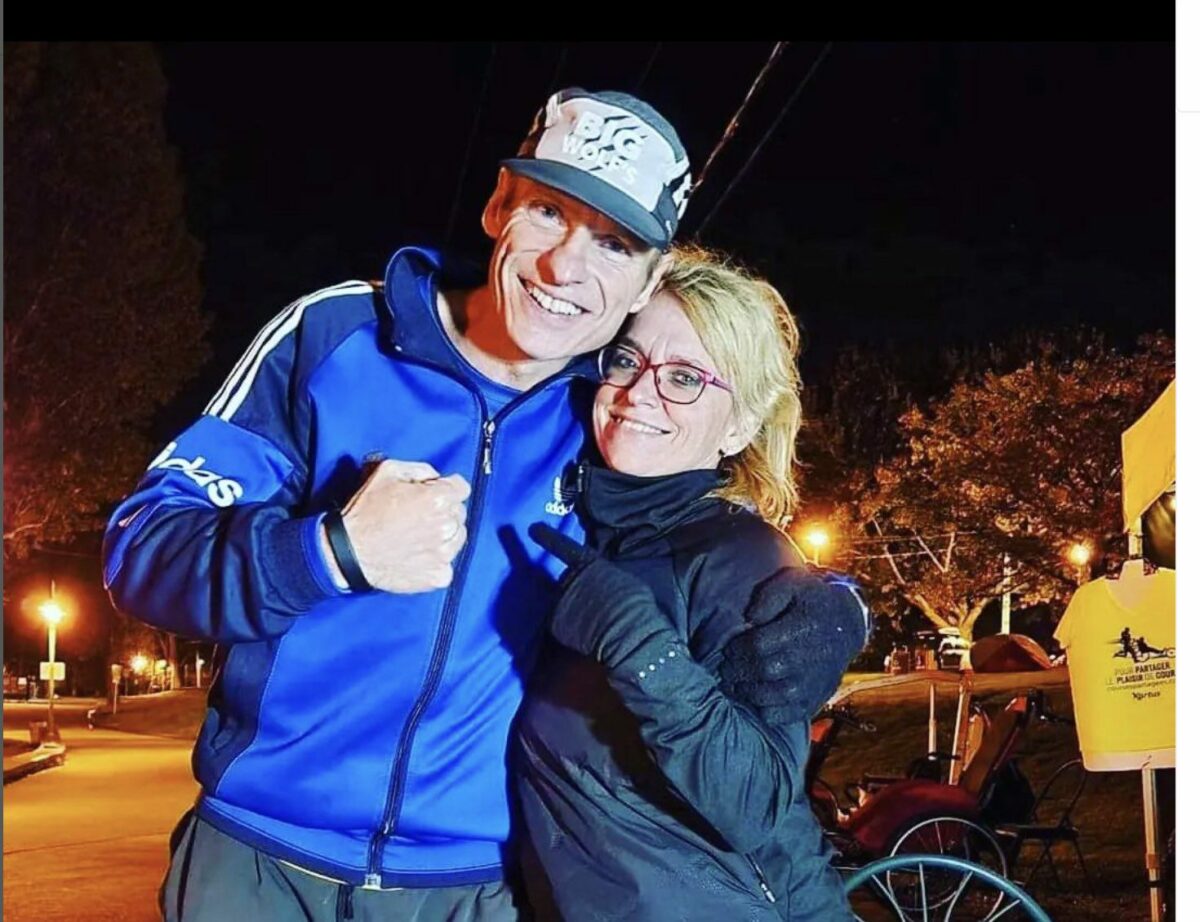
In the world of endurance athletics, the pursuit of excellence often transcends physical ability. Marco Poulin’s recent achievement at Big Wolf’s Backyard Ultra in Cacouna, Quebec, serves as a powerful illustration of this idea, moving beyond mere numbers to offer insights into the mental and physical resilience that is crucial in ultrarunning.
Completing 307.6 kilometers over 46 hours, Poulin not only shattered the course record but also surpassed his own personal best by a considerable margin. This accomplishment, emerging from a format where competitors must run a 6.706-kilometer loop every hour, reveals much about pacing and endurance strategies. The backyard ultra demands that participants maintain a sustainable effort; understanding when to push, when to rest, and how to navigate the unpredictable emotional and physical landscape of ultra-distance racing is paramount. As seasoned athletes know, it’s a delicate balance—a long game that rewards patience and strategy over sheer speed.
In the lead-up to this race, Poulin’s journey reflects an enduring commitment to self-improvement and adaptability. Transitioning from previous setbacks, including personal struggles with addiction and years in prison, he exemplifies the principle that athletic growth often mirrors life’s broader challenges. Running serves as both a physical outlet and a metaphorical journey, where every loop completed offers not just a measurement of distance but a layer of mental fortitude built through experience.
His relationship with fellow competitor and Sherbrooke ultrarunner Sébastien Roulier at this race underscores the importance of community and support — two critical elements that can elevate an athlete’s performance. They reached the latter stages of the race together, demonstrating the collaborative spirit essential in endurance activities. This camaraderie can spell the difference between continuing and stepping back. Experienced athletes will recognize how shared moments of fatigue, determination, and ultimately, triumph forge connections that enhance not only individual performance but the overall experience of racing.
Moreover, Poulin’s narrative prompts reflection on motivation beyond personal accolades. He channels his experiences into a broader purpose, using ultrarunning to engage with and inspire others—especially those facing challenges of their own. Through his work at Partage St-François, a shelter for those at risk of homelessness, he underscores that endurance isn’t solely about physical capacity or competition; it can also embody resilience in navigating life’s adversities alongside others. For seasoned athletes, this notion might resonate in their own experiences of reaching out, whether mentoring younger runners or pooling the collective strength of a training group to lift one another through tough sessions.
An often-underappreciated aspect of long-distance running lies in its psychological dimensions. The race against oneself can evoke feelings of doubt and fatigue, which seasoned athletes are all too familiar with. The mental toughness required to push through these barriers often exceeds the physical demands of the sport. It is in these quieter, personal battles that the deeper lessons of endurance emerge. Each lap that Poulin ran was a test not just of legs and lungs, but of resolve and mental clarity—an interplay that resonates with anyone who has faced challenges on the trail, whether from injury, weather conditions, or mental fatigue.
The iterative process of endurance training—dealing with setbacks, adjusting plans, and recalibrating goals in the face of adversity—forms the backbone of athletic growth. Just as Poulin had to reassess strategies from past races and learn from experiences of competition against formidable opponents, it’s essential for any experienced athlete to continually evaluate their approach, recognizing that progress is rarely linear.
The concept of pacing is vital, not only in the literal sense during races and training but also in the grander timeline of one’s athletic journey. Understanding the nuances of energy distribution and mental resources can heavily influence outcomes and satisfaction in an athlete’s growth. It’s not merely about how fast one can run but also about maintaining a steady rhythm that allows one to harness their full potential over the long haul.
Moving forward from races like Poulin’s, seasoned athletes might find value in his journey not just as a narrative of triumph, but as a practical guide to resilience. The road to achievement, especially in endurance sports, is dotted with challenges that shape not only one’s athletic identity but also personal resilience and capacity for empathy.
Ultimately, the key takeaway for those in the endurance community is to recognize that each race serves as not only a physical endeavor but an emotional and mental tapestry. Embrace your own journey through endurance sports, knowing that the loops of fatigue, joy, and personal connection all contribute to the intricate pattern of growth. Allow these experiences to fuel not just your next run but your entire approach to life—because like in racing, it is often the quiet perseverance amidst the noise that reveals our true strength.
