


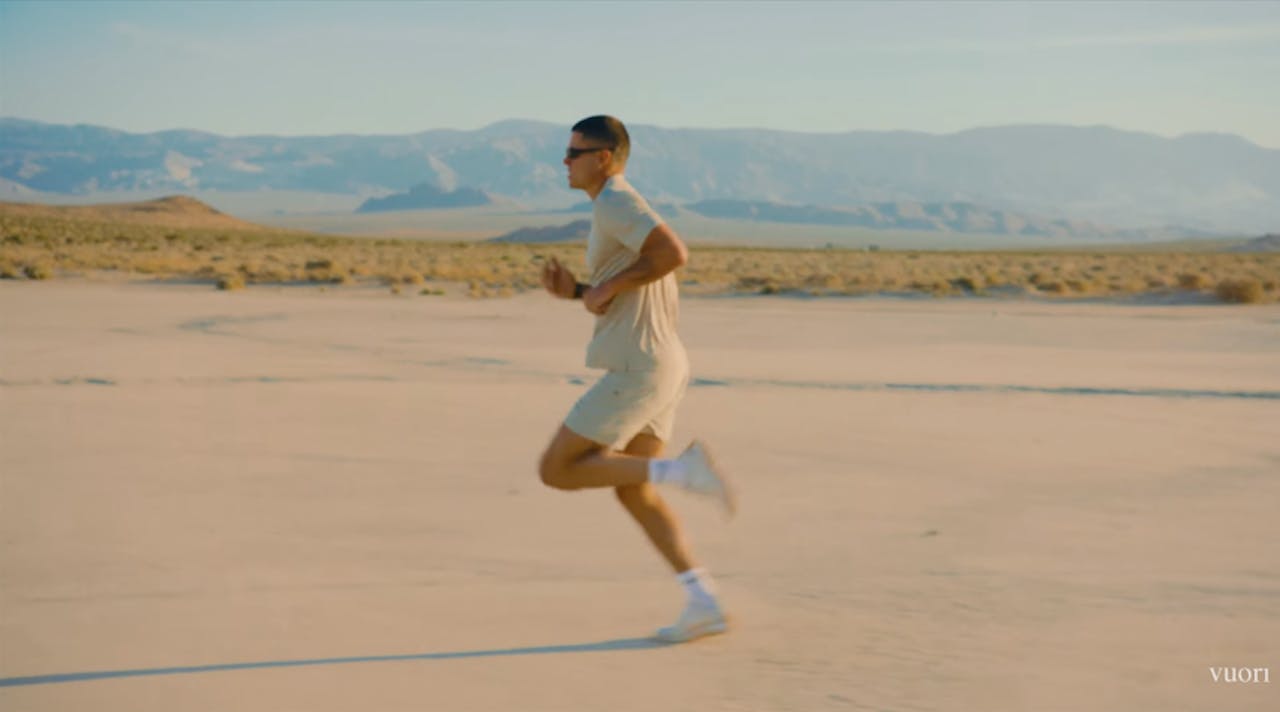
In the running community, stories of endurance often echo the principles we live by: focus, resilience, and the ability to adapt. The latest installment of Vuori’s ‘Body Follows the Mind’ campaign chronicles the journey of William Goodge, a British ultra-runner whose recent cross-country escapade across the United States has sparked interest beyond mere spectacle. Covering 3,064 miles in 55 days, Goodge’s story is not just about distance but also about the deep mental engagement and calculated physical efforts that define every step of such a monumental endeavor.
Goodge, previously a rugby player, approached distance running as a means to navigate complex personal challenges. Following the loss of his mother to cancer in 2018, he found solace in the rhythm of running. The meditative quality inherent in long-distance running often provides a dual benefit: an outlet for unresolved emotions and an opportunity for focused reflection. It becomes a space where distraction evaporates, and the mind is free to wander or process grief in a way that feels less linear than our usual thought patterns allow.
This isn’t about sensationalizing the emotion of loss or the triumph of an athletic feat; it’s about recognizing how running can serve as a framework for navigating life’s complexities. A multi-day challenge like Goodge’s is a testament to the mental tenacity required to persist through physical fatigue while maintaining a keen awareness of one’s mental state. It illustrates the importance of pacing—in both physical terms and emotional terms. Just as one must find a sustainable rhythm while running long distances, so too must an athlete cultivate a mindset that acknowledges struggle without becoming overwhelmed by it.
Within endurance sports, we often speak of the motivational techniques that help us push through the inevitable low points. For Goodge, running allowed for introspection, a way to bring clarity to grief. Those sitting in discomfort and questioning their purpose during long runs can also find that the journey is punctuated by discovery—not just of miles covered, but of insights gained. The act of moving through physical barriers often parallels the capacity to work through emotional obstacles, allowing endurance athletes to connect their exterior landscape with their internal dialogues.
The film’s backdrop, set in the vast desert landscape of Joshua Tree, evokes more than visual beauty; it symbolizes the mental landscape of an ultra-runner. Each run becomes a conversation with the self, a means to reconcile disparate feelings and thoughts while intentionally engaging with the physical world. Goodge’s perspective mirrors a common truth among experienced athletes: training isn’t merely physical; it is a robust mental exercise that can reinforce the connections we have with our environment and ourselves.
The filmmakers adeptly illustrate this connection through their storytelling, emphasizing Goodge’s emotional struggles and the way running has shaped his coping mechanisms. His words reflect a deep understanding of the cyclical nature of challenge and growth. He acknowledges running as more than an escape; it becomes a ritual for processing life’s complexities and distilling them into manageable pieces. The intimacy of running connects him to his own emotions, allowing space for grief in a controlled environment.
His journey isn’t just a testament to personal fortitude; it’s also about the broader community formed around shared experiences of endurance. The company Vuori, in promoting Goodge’s narrative, emphasizes the collective understanding that endurance sports foster—a network of individuals who recognize the subtle yet powerful bond created through shared struggles. Whether through training runs or race-day camaraderie, this community thrives on the shared understanding that each step forward, no matter how laborious, contributes to a greater sense of belonging and purpose.
Furthermore, Goodge’s experience aligns with the continual process of adaptation that seasoned endurance athletes know all too well. Each long session forces adjustments—not merely in physical training but also in mental preparations. Adapting one’s mindset is as crucial as developing cardiovascular capacity. In a journey as extended as Goodge’s, the need to recalibrate expectations multiple times is paramount. An athlete learns to accept not every day will yield the same results; progress can manifest differently, often requiring the kind of mental agility that comes with time and experience.
Vuori’s initiative to intertwine product launches—such as the Run Qualify Short and Terra Run Tee—with this cinematic narrative also underscores the importance of practical considerations in endurance training. Each piece of gear is designed to enhance movement efficiency, echoing the greater principle of facilitating an athlete’s journey through comfort and performance. This attention to detail ensures that physical preparation supports optimal mental performance, providing an athlete the necessary tools to navigate their path effectively.
As we run, whether on solitary trails or crowded race courses, it is essential to embrace the lessons that time on our feet teaches us. Goodge’s journey is not an outlier but rather an illustration of a universal truth—intertwining the physical with the emotional is where the real challenge and, ultimately, transformation occurs. The rhythm of our footfalls can lead us through grief, introspection, and community, paving the way for each of us to emerge stronger, more attuned, and ready for the next challenge.
Engage with your next long session knowing that the endurance you cultivate mirrors both the physical effort and the mental fortitude required for growth. In every journey, remember that both the body and the mind need to move together, and each mile is an opportunity to tune into that connection.
