


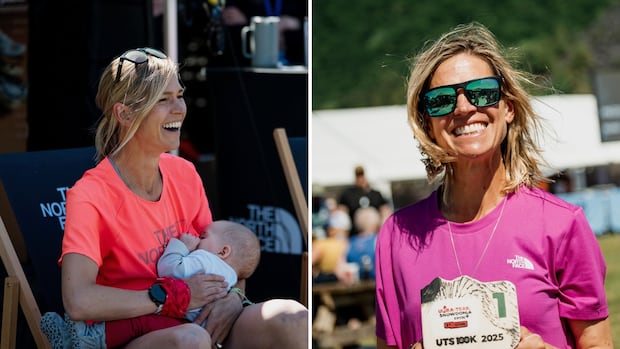
In the world of endurance sports, the journey of the athlete is often marked by personal trials, resilience, and the quiet yet unwavering determination to push boundaries. Stephanie Case’s recent performance at the Ultra-Trail Snowdonia is a profound example of that journey, echoing the complex interplay of physical and mental fortitude that endurance athletes know all too well. Completing a challenging 100-kilometre race six months postpartum while breastfeeding her baby at aid stations showcases not just a remarkable physical feat but, more importantly, an exploration of how we confront and navigate the myriad challenges along our paths.
Coming back to the sport is rarely straightforward. For Case, who had a successful career as an ultrarunner and faced a three-year hiatus due to a series of fertility struggles and a challenging postpartum period, the transition back to racing was tinged with uncertainty. This experience resonates deeply with seasoned athletes who understand that conditions beyond one’s control often influence performance. The mental narrative surrounding recovery, too, can become a substantial hurdle—the doubts creep in, prompting questions about readiness and capability. To an experienced endurance athlete, this is reminiscent of the mental battles faced during injury recovery or when navigating personal setbacks.
At Ultra-Trail Snowdonia, Case started 30 minutes behind elite runners but still delivered an impressive winning time. This is a testament not only to her physical preparation but also to her mental resilience. Athletes inherently understand pacing—not just in terms of speed, but in how they navigate their emotional landscape during extreme endeavors. The decision to initially consider this race a practice run speaks to an intelligent approach to training and recovery, where the athlete allows space for adaptation and learning without the pressure of performance expectation.
During the race, moments of motherhood intertwined with the demands of endurance racing, challenging the notion of multitasking in high-stakes scenarios. Case’s experience at various checkpoints illustrates the level of logistical planning that active parenting requires, and it serves as a reminder of the necessity to recalibrate one’s focus when balancing personal goals with responsibilities. Transitioning from race mode to “mom mode” mandates an ability to switch gears mentally, which speaks volumes about the cognitive strategies employed by endurance athletes to remain present and engaged, despite their relentless physical exertion.
The harsh reality is that regardless of athletic prowess or prior achievements, the demands of racing can weigh heavy, particularly when compounded by emotional ties and commitments outside the sport. Case’s reflections on the experience of being away from her daughter for an extended period resonate with endurance athletes who have faced similar emotional challenges during prolonged events. The internal dialogue—grappling with the competing desires of personal achievement and family responsibilities—serves as an authentic experience that can resonate deeply within the community.
Moreover, discussions surrounding the societal expectations of new mothers and the performance pressure they face shine a light on a broader conversation within the endurance sports community. Athletes often grapple with the expectation to excel despite personal challenges, which can foster a communal but sometimes unrealistic narrative about success. Case’s story encourages reflection on the diversity of paths athletes undertake; it highlights that the pursuit of excellence can manifest in myriad forms, particularly when layered with personal growth and the often-overlooked struggle for balance.
Returning to the race track, especially after significant life events, invites a nuanced understanding of success, one that transcends mere finishing times or podium placements. As Case eloquently stated in her reflections, the journey after childbirth isn’t a “comeback” in the traditional sense; it signifies the evolution of an athlete’s identity, integrating new dimensions of motherhood and personal growth into what it means to be a competitive runner.
Endurance athletes can relate to this perspective—it’s about the evolution of one’s self in relation to the demands of sport and life. The lessons learned through endurance training, whether they occur during a long run or an entire race, permeate our understanding of resilience. Every run, every workout, every challenge distilled into moments of clarity and reflection reminds us that while physical prowess is significant, the true essence of endurance lies in how we adapt, how we cope, and how we continue to redefine our boundaries and motivations.
Ultimately, Case’s narrative offers an honest takeaway for all endurance athletes: the most profound insights often come during times of challenge, and our paths—though unique—can be sources of deep connection and understanding. Embrace the journey in all its complexity; it’s in these moments, perhaps when we least expect it, that we resonate most with what it means to be an athlete. When you lace up your shoes for your next long session, allow the experience to anchor you in your own process, and recognize that every step forward is steeped in not only physical endurance but the rich tapestry of life’s challenges and triumphs that define you as both an athlete and a person.
