


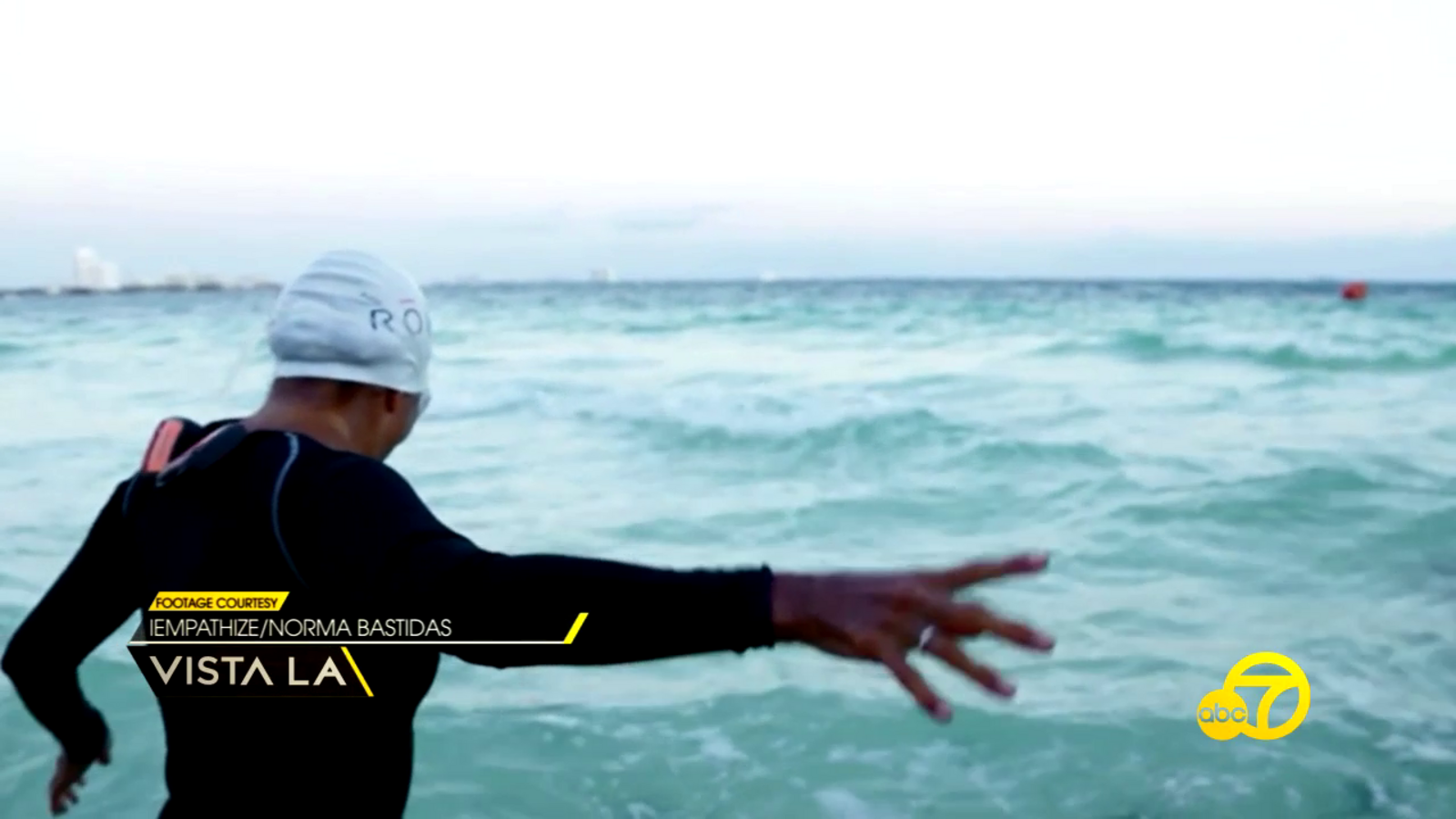
In the heart of endurance sports lies a profound understanding of resilience, a concept that resonates deeply with those who push physical and mental boundaries. Norma Bastida’s journey is a testament to this understanding, one that reflects not only the struggle but the relentless commitment to transformation through endurance.
Growing up in Mazatlán, Mexico, Bastida faced a landscape etched with challenges, shaped by social struggles and familial loss. The loss of her father at a young age plunged her into a cycle of adversity, which, unfortunately, sparked a series of traumatic experiences that many would struggle to overcome. Yet, in examining her journey, we find not just a story of survival but a model for the endurance athlete’s mindset.
As she navigated her difficult environment, Bastida encountered her first real test of resilience during her adolescence—a stark reminder of how life can sometimes force one into agonizing circumstances, much like racing through a treacherous course where every turn can present new obstacles. She then found an escape route offered under the guise of a modeling job abroad, which quickly morphed into a dire reality of human trafficking. In that moment, her physical and mental thresholds were pushed to their extreme limits. Yet, instead of succumbing, she plotted her escape and eventually managed to regain control over her life.
This requires a significant shift in mindset, something endurance athletes know well. The realization that our circumstances don’t define us, but rather our responses to them do, is crucial. Resistance in training often mimics struggles in life; both require us to adapt, to evolve, and to confront our deepest fears. Having paid off her captors and relocated to Canada, Bastida’s experience laid the groundwork for the discipline required in endurance sports—setting goals, persevering through discomfort, and engaging a holistic understanding of what it means to train for something greater than oneself.
Arriving at a semblance of normalcy, Bastida continued to face challenges that would test her newly cultivated resilience. Life handed her another trial when her oldest son was diagnosed with a debilitating condition. It was this love for her children that transformed her pain into motivation, akin to how many athletes channel their personal struggles into their training. In those moments of doubt, when fatigue claws at our heels, remembering our “why” can be the driving force to push through.
In running, Bastida found not just a physical outlet but a healing mechanism—an embodiment of resilience manifesting through movement. Her initial foray into running half marathons echoes the gradual process inherent in endurance training. It requires patience, pacing, and a strategic evolution of one’s abilities, breaking personal records one step at a time. When she completed her first marathon and then qualified for the Boston Marathon, it was not merely an achievement; it was a manifestation of her journey, a tangible expression of hard-won perseverance.
Eventually, her ambition expanded into ultra-running and even record-breaking pursuits. This highlights the endurance athlete’s continual quest for growth—a divergence into spaces previously thought impossible. Setting her sights on running all seven continents in seven months wasn’t just a personal goal; it exemplified how embracing discomfort can lead to extraordinary feats. In this, we discover a critical aspect of endurance athletics: that we often have far more capacity to withstand strain than we believe.
Achieving a world record set under harsh conditions serves as a metaphor for the unforgiving nature of endurance tests. Each continent she traversed offered fresh terrains that pushed her mental and physical limits, just as athletes routinely face new challenges on varying courses. Every step taken in training or competition is often a mental exercise in perseverance, crafting a fortified mindset honed through repeated efforts against the odds.
Bastida’s story took a pivotal turn as she found the courage to publicize her past, revealing experiences that encoded societal stigmas. This moment parallels the way athletes often confront their vulnerabilities, recognizing that sharing challenges can create communities of understanding and support. In the world of endurance sports, openness about setbacks can foster collective strength. It becomes a conversation about progress rather than perfection, paving the way for new dialogues around resilience.
As Bastida geared up for her charge toward setting the Guinness world record for the longest triathlon, the ambition was not simply to eclipse a record but also to raise awareness about human trafficking. Her event was a physical manifestation of her commitment to a cause close to her heart, mirroring how countless athletes utilize events as platforms for social change. The rigorous training regimen involved not just a physical challenge but a commitment to embracing the uncomfortable—the essence of endurance.
The endeavor, which entailed swimming, cycling, and running through uncharted territories, reflects the intricate pacing and adaptive mindset required not just in triathlon but in life. The acknowledgement of fears and the necessity of stepping into the unknown are elements familiar to anyone who trains for endurance events.
At its core, what we glean from Bastida’s story, whether in the racing world or the broader context of life, is that resilience is a practice. It is cultivated through each step, lap, or mile we commit to, transforming our pain into purpose. The endurance mindset thrives on the understanding that challenges refine us, shaping our identities and our driving motivations.
As you lace up your shoes or prepare for your next long session, the reminder lies in knowing that every obstacle is an opportunity to grow. Much like Bastida’s journey, your path is uniquely yours—embrace it, cherish the resilience you cultivate, and let that carry you through your own miles, one steady breath and stride at a time.
