


The Ironman Pro Series ups the ante with a new draft zone and an increase in RaceRanger technology. Get the details, plus what this means (and doesn’t mean) for age-groupers.
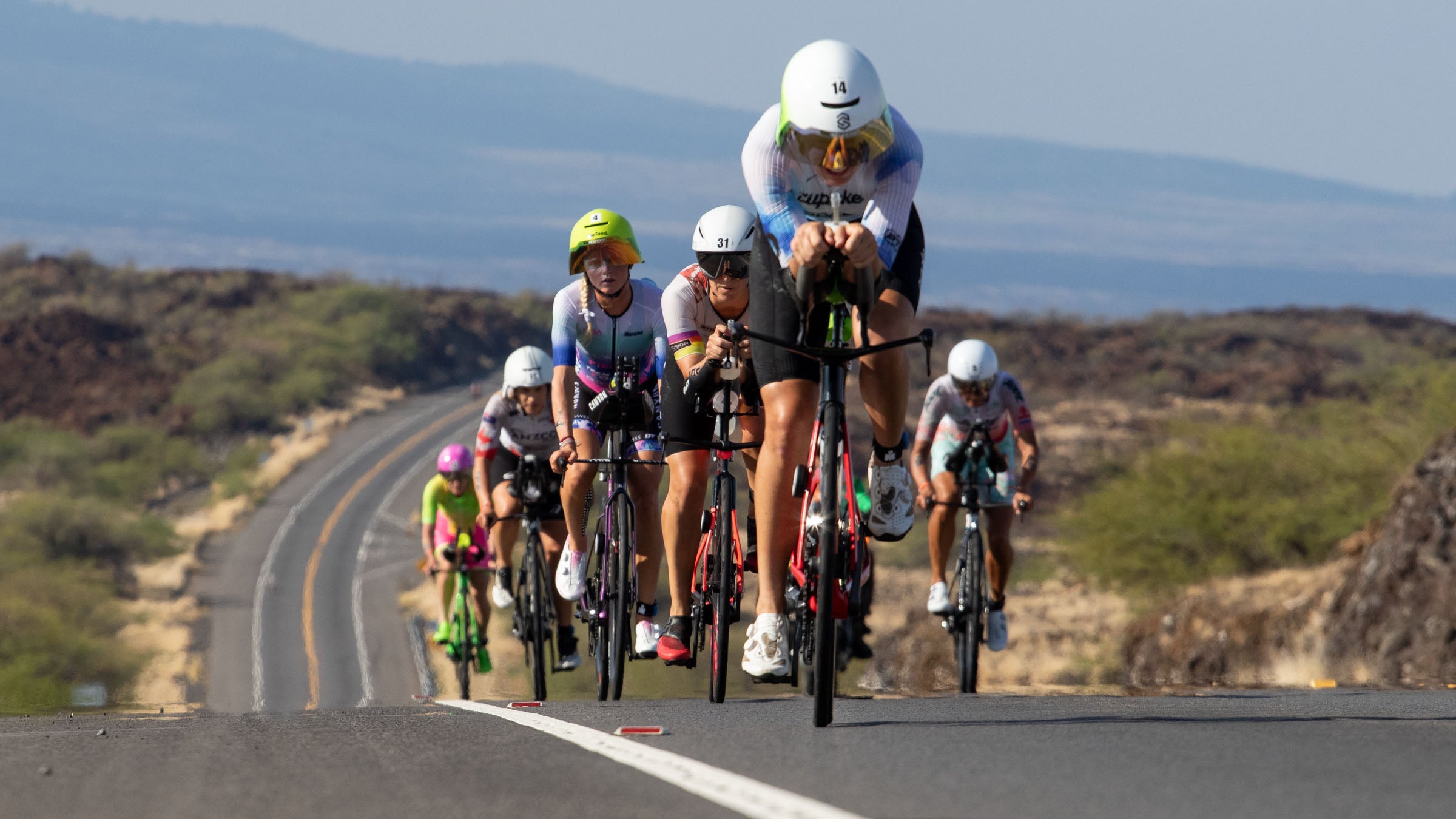
Ironman has increased its drafting zone for professional triathletes from 12 meters to 20 meters, the series announced today. (Photo: Brad Kaminski/Triathlete)
On January 27, 2026, the Ironman Pro Series announced a significant rule change impacting professional triathletes. Starting March 1, athletes will now be required to maintain a distance of 20 meters during race segments. This new draft zone is an increase from the previous 12 meters and aligns Ironman with other long-course professional series like the T100 Tour and Challenge Family. However, it’s important to note that the draft zones for age-group participants will remain unchanged.
This adjustment follows extensive research conducted by Ironman over the past six months, focusing on race dynamics and athlete performance. Aerodynamics expert Marc Graveline led the study, using professional riders at 70.3 race speeds equipped with RaceRanger technology. The aim was to analyze how varying draft-zone distances influence race dynamics and the overall competitive landscape.
The findings revealed that increasing the draft zone from 12 meters to 16 meters did not significantly alter outcomes, yet the leap to 20 meters produced a marked reduction in aerodynamic advantages. “We sought to use rigorous testing methodologies to guide our decisions,” stated Ironman CEO Scott DeRue in a related press release. “The data clearly indicated that a 20-meter draft zone substantively impacts race dynamics. We believe this change is crucial for the evolution of fair and competitive racing at the pro level.”
Enhanced Draft Monitoring with RaceRanger Technology
In order to implement the new draft zone effectively, Ironman plans to broaden the application of RaceRanger technology across many of its professional events. This anti-drafting system leverages a combination of Bluetooth and GPS technology to ensure compliance with the newly established 20-meter draft zone. Previously utilized at Pro Series races in 2024, RaceRanger had shown promising results during a test at Ironman Florida in 2023.
RaceRanger involves mounting devices on the athletes’ bikes—one attached to the front fork and another on the seat post. These devices communicate to detect when one athlete intrudes upon another’s draft zone, alerting both the athlete and race officials about potential violations. The system not only monitors compliance but also logs data on the duration spent in the draft zone, which assists in post-event rule enforcement.
Comparative Framework: Draft Zones in Other Series
With this adjustment, Ironman becomes the last professional long-course series to adopt a 20-meter draft zone. Other competitions have long employed this regulation to prioritize individual effort during races. For instance, Challenge Family introduced a 20-meter zone in 2014, while T100 has incorporated it into their pro series since 2023. Research comparing the enforcement of drafting rules in Ironman and T100 races revealed stark discrepancies, with Ironman’s shorter draft zone leading to considerably longer average draft times compared to T100 competitions.
The shift to a 20-meter zone, bolstered by RaceRanger data, has proven effective in curbing drafting instances in other racing formats. A review of drafting times from recent races unearthed average illegal drafting durations of 1:09 for women and 2:20 for men in Ironman’s 12-meter zone. In contrast, T100 competitors faced significantly lower averages of just 25 seconds for women and 53 seconds for men, underscoring the impact of a wider draft zone combined with robust technological enforcement.
Implications for Age-Group Competitors
While professionals must adapt to the new 20-meter draft zone, age-group competitors will keep their existing 12-meter limit. DeRue clarified that differing factors such as race speeds and course density informed this decision, emphasizing the need for separate regulations during amateur competitions. This approach aligns with other race series like Challenge Family and T100, which adhere to World Triathlon standards for non-drafting events.
For age-group races, the drafting zone will remain at 12 meters—roughly six bike lengths—accompanied by a three-meter width. Athletes have 25 seconds to execute a passing maneuver, with penalties imposed for failure to do so. Specifically, a three-minute penalty for iron-distance races and a two-minute penalty for half-iron-distance events applies if an athlete either fails to complete their pass or lingers in the draft zone.
The Role of RaceRanger in Draft Compliance
As previously discussed, RaceRanger is a revolutionary electronic system designed to uphold drafting rules during competitions. By utilizing sophisticated technologies including Bluetooth and GPS, it ensures that athletes adhere to the specified drafting zones. The system has gained traction since its introduction, and Ironman’s first use of RaceRanger at Pro Series events in 2025 recorded a notable reduction in average illegal drafting times—over 25% compared to the previous year.
In conclusion, the Ironman Pro Series is poised to significantly enhance its competitive integrity with the implementation of a wider draft zone for professional athletes. This change, along with an expanded use of RaceRanger technology, is a crucial step toward creating a fair and competitive environment in the world of triathlon. As the series moves forward, it will be fascinating to observe the ramifications for both professional athletes and the age-group community.
