


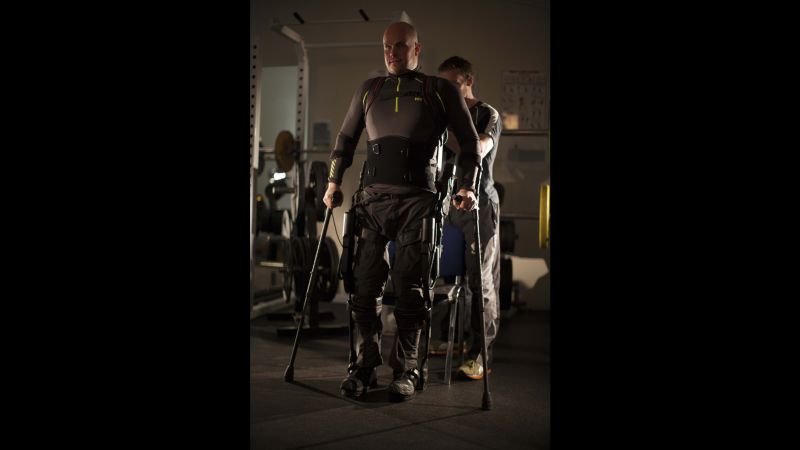
Mark Pollock’s journey is a testament to the mental and physical resilience found in the world of endurance athletes. Raised in Northern Ireland, Pollock’s early dreams of becoming Superman were challenged when he lost his vision at a young age. As an adult, he faced unexpected tragedy again: a fall that left him paralyzed from the waist down. However, Pollock’s story is not simply about overcoming adversity; it’s about a continuous process of adaptation, perseverance, and an unwavering commitment to exploring one’s limits.
Endurance athletes know that every race, every training session, requires a mental framework for handling setbacks. Pollock’s path underscores a reality many of us face: the loss of control, whether from injury or other life circumstances. When Pollock’s sight vanished due to complications from surgery at 22, he likened the experience to losing his identity. Yet, rather than dwelling on what he couldn’t do, he shifted his perspective towards possibility, asking, “What is going to be possible for me?” This reframing echoes a fundamental principle in endurance training—understanding that setbacks are not outliers but integral parts of the journey.
For Pollock, the redefinition of purpose led him to tackle challenges that might have seemed insurmountable. Through sports, he regained a sense of agency. Competing in ultramarathons, adventure races, and even becoming the first blind man to reach the South Pole, he embraced a mindset that resonated deeply with the ethos of endurance athletes: the understanding that true competition is with oneself. Every time Pollock stepped into a challenging environment, he did not aim solely for victory; he sought to engage with every moment of that experience, committing to the process rather than fixating on the outcome.
In this commitment lies a crucial lesson: the relationships between training, pacing, and mentality. Pollock’s transition from a blind athlete to one navigating the world in a wheelchair and eventually utilizing a robotic exoskeleton revealed the power of mental resilience in long-term performance. Embracing the fact that he could not only face challenges but also redefine them is a cornerstone in endurance sports. It’s about maintaining tempo in your mental game, especially when shifts in physical capability occur. This aspect of his journey draws parallels to an athlete coping with injury or unexpected performance dips, illustrating how the inner dialogue becomes pivotal—turning limitations into areas for growth.
Even as he faced the stark realities of paralysis, Pollock cultivated support systems around him, whether through engaging with doctors or leaning on his fiancée during recovery. In endurance sports, the surrounding community often plays a vital role in sustaining motivation and resilience. This relationship between athletes and their support networks creates a culture of accountability, highlighting that even the most self-reliant individuals benefit significantly from shared experiences and collective strength.
Pollock’s foray into high-tech rehabilitation, like the use of the robotic exoskeleton, offered a glimpse into the future of how athletes, regardless of ability, might find new tools to adapt their training. The technology he used allowed for movement in engaging and participatory ways, showcasing the importance of innovation in the realm of endurance. This technological advancement parallels how endurance athletes are increasingly using data and tools to enhance training, recovery, and performance. Yet, at the heart of innovation remains a human-centric focus—the need to engage, adapt, and thrive despite challenges.
As Pollock trains and grinds away at his recovery, he spends hours each week on physical training, knitting together his desire for autonomy with the reality of his physical capabilities. His statements about the emotional weight of daily tasks resonate with many endurance athletes who must confront their limitations after a setback. The monotonous nature of long sessions can often reflect the struggles of mental fortitude, testing an athlete’s resolve. Acknowledging that discomfort is part of the growth process allows individuals to embrace endurance as not just a physical endeavor but a deeply mental one as well.
In sharing Pollock’s experiences, the narrative does not overwhelmingly focus on triumph or sensational storytelling. Instead, it highlights the slow, deliberate, often unglamorous work involved in building back to a place where one can participate fully in an athletic capacity. It’s easy to overlook that dwelling on past abilities can lead to stagnation; Pollock’s focus on the present and what remains possible is a key takeaway.
As endurance athletes, there is profound wisdom in recognizing that our journeys are marked by ebbs and flows, and that our adaptation is what truly defines our progress. Pollock teaches us that pacing isn’t just for races; it’s a discipline for life’s unpredictable courses. Whether following a demanding training schedule or maneuvering around obstacles, the essence of endurance lies in how we adapt and reinterpret our limitations into pathways for exploration. When setbacks arise, remember that every struggle presents an opportunity to re-hone what is possible, ultimately enhancing both resilience and adaptability on the road ahead.
