


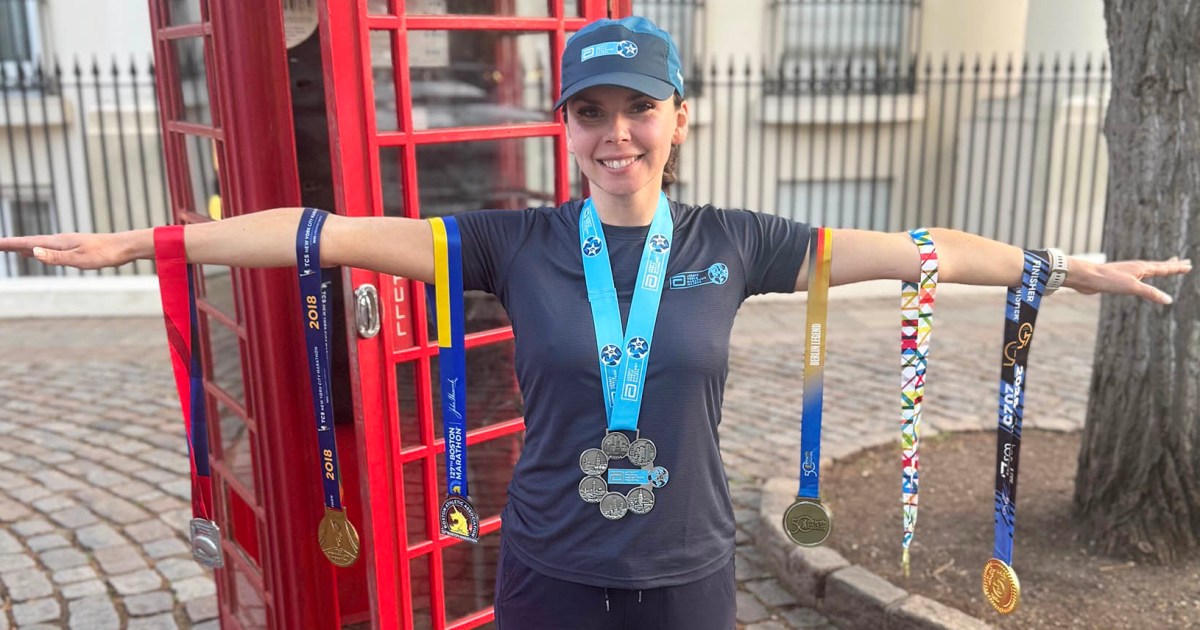
Kristina Coccoluto’s journey reflects the complexities and nuances of endurance not only in racing but in life. A dedicated athlete, she embraced a lifestyle characterized by healthy choices, yet faced a genetic predisposition to cancer that loomed like a persistent shadow over her existence. Her mother faced breast cancer twice, while aunts lost their battles to this disease. With personal history weighing heavily alongside her own past struggle with melanoma, Kristina found herself navigating the duality of being an active participant in her health while contending with uncertainty.
At 25, genetic testing unveiled a mutation in the BRCA gene, elevating her risk of breast and ovarian cancer dramatically. Understanding the stakes involved, she initially opted for surveillance—monitoring her body closely for any changes. For a time, she balanced the urgency of her health risks with the everyday pleasures of life: getting married, welcoming children, and reveling in the joys of motherhood. Yet, as any endurance athlete knows, mental and emotional resilience is forged in the crucible of challenge, often from unexpected sources.
When she found a lump at 29, the waiting was excruciating. That ten-day span illuminated an undeniable truth—her healthy lifestyle alone couldn’t mitigate the risks she faced. The looming threat of illness transformed her perception of time, pushing her to recognize the need for agency over her health and future. In that moment, she began to comprehend the deeper connections that bind endurance, willpower, and the capacity for self-advocacy.
Coccoluto ultimately chose to undergo a double mastectomy, a decision echoing the sacrifices athletes often make in pursuit of greater goals. When the time came for her to take action, she transformed this monumental life change into a personal campaign. Fundraising for Bright Pink, she chose to run the 2015 Chicago Marathon, embracing the challenge of distance running not just as a test of physical prowess, but as a means to reclaim a measure of control. It was a powerful manifestation of her resilience, echoing the very tenets of endurance sports: confronting discomfort, pushing boundaries, and maintaining focus amid uncertainty.
Her experiences during those runs were not solely about physical endurance; they were revelations steeped in self-discovery. Crossing the finish line marked not just a completion of a marathon but a reconceptualization of her identity. Each stride echoed a commitment to overcoming adversity, illuminating the idea that endurance isn’t merely physical; it’s deeply psychological. Embracing a new version of herself after surgery, she recognized a sense of strength that surpassed her previous understandings, embodying the notion that true resilience often emerges in moments of vulnerability.
Life unfolded with another pregnancy, and her desire to honor her health and that of her children became heightened. This motivation sparked her commitment to further races, propelling her through the New York Marathon in 2018. The sense of community around her marathons spurred her onward, showing how shared experiences can lift individuals and forge connections. Each subsequent race—a goal to complete the World Marathon Majors—symbolized much more than personal achievement. These endeavors were intangible markers of hope, not only for herself but for those whose lives had been touched by cancer.
Yet endurance sports also carry their share of physical setbacks. A knee injury presented itself during training for the Boston Marathon, forcing her to re-evaluate her approach. Here, the lessons of endurance took on new layers. She adapted her training to incorporate deep-water running, using Fluid Running workouts to mitigate pain while continuing to build strength. Making necessary adjustments in training, as many seasoned athletes know, is vital for longevity in the sport. This ability to pivot and embrace alternative methods reinforced her resolution, demonstrating the essence of resilience: the determination to find a way when faced with barriers.
Through all these challenges, the focus on her young cancer patient, Zoey, added another dimension to her journey. The bond formed between them as she trained for the marathon became a powerful reminder of the importance of community. It underscored the notion that while the endurance athlete’s path is often solitary, profound connections wait just beyond the finish line, reinforcing shared purpose in adversity.
When she crossed the Boston Marathon finish line alongside her sisters, it was more than a reflection of overcoming physical hurdles; it was the culmination of years of grappling with her identity, health, and family legacy. Coccoluto’s subsequent marathon endeavors further embodied her journey of self-acceptance, allowing her to redefine how she viewed her body post-mastectomy.
Preparing for marathons became a medium through which she allowed herself to reconcile the changes that had transformed her life. It was the Berlin Marathon that crystallized her shift in mindset, where the trials of training revealed an often-underestimated truth: one must often cultivate patience and compassion for oneself. The path of endurance isn’t linear, and setbacks or changes are part of the terrain. In these moments of struggle lies profound insight about self-worth and the acceptance of one’s evolving narrative.
As she completed races across the globe, her commitment wasn’t only to crossing the finish line—it was a promise to herself and those she loved that she would continue to challenge herself, embrace vulnerability, and redefine strength amid challenges. Ultimately, she demonstrated that endurance is less about the miles logged and more about the understanding gained and the connections nurtured along the journey.
So as you lace up for your next long run, remember that perseverance is measured not just in miles but in your willingness to redefine what resilience means in the face of challenges, finding peace with each step as you carry your story forward.
