


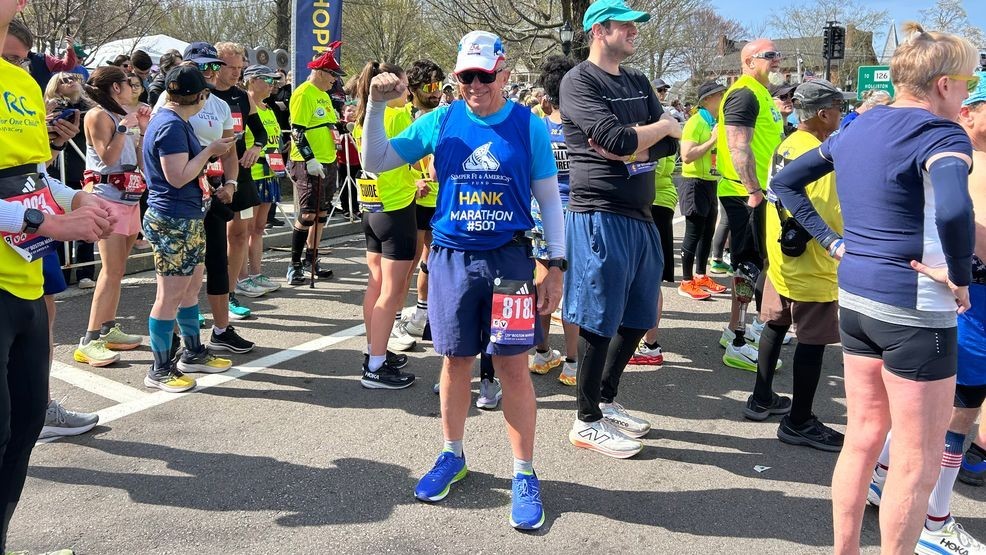
Hank Donigan, a retired Marine and cancer survivor, achieved a significant milestone this week: he completed his 500th marathon at the venerable Boston Marathon. For many in the endurance community, the accomplishment itself is a testament to dedication, but for Hank, it encapsulates a journey shaped by purpose and a commitment to support others. He has transcended the personal gains one might typically associate with marathon running to channel his efforts into uplifting fellow veterans, having raised over $130,000 for Semper Fi & America’s Fund.
In the world of endurance athletes, the concept of resilience is often discussed in terms of physical stamina, the ability to endure pain, and the drive to push through where others falter. However, resilience extends beyond raw physicality; it encompasses mental tenacity and a commitment to a cause larger than oneself. For Hank, that cause emerged amidst the struggles of his fellow service members—particularly those who returned from deployments wounded, both physically and mentally. He often reflects on their needs as they faced the harsh reality of recovery, navigating the bureaucracies of healthcare while their families grappled with emotional and financial strain.
After a deployment, Donigan witnessed first-hand the challenges faced by service members in naval hospitals, where he saw families making sacrifices to be near their loved ones during arduous recoveries. This reality ignited in him a desire to contribute meaningfully, creating a foundation upon which he built his marathon-running journey. Each marathon became a mobilization tool for awareness and funding, allowing him to bridge personal endurances with community support.
Another key aspect of endurance that Hank embodies is the act of returning from adversity. Diagnosed with a golf ball-sized tumor in his brain, he faced the physical limitations that often accompany surgery and treatment. For many athletes, such a health scare might seem like a definitive end to competitive pursuits. Yet, rather than viewing the situation merely through the lens of restriction, Donigan chose to harness it as an opportunity for reinvention. His recovery was not simply about regaining what was lost; it became a recalibration of his goals. As he navigated the hurdles posed by major surgery and radiation, his mindset remained resolutely forward-looking. Three weeks post-surgery, he was already lining up to run his next marathon, adapting swiftly to his new circumstances. Running did not merely symbolize a return to form; it became a framework through which he could redefine his capacities and potentials.
Hank’s story reveals the layers inherent in an athlete’s mental game. It offers insight into pacing oneself—not solely in the context of over the 26.2 miles of a marathon but across the broader scope of life challenges. His perspective on endurance suggests that an athlete isn’t defined only by their times or distances but by their ability to persevere through the inevitable fluctuations of life. Each runner knows that mental fortitude is essential when facing the proverbial wall. Donigan faced that wall multiple times, yet he understands it as a pivotal moment for reflection, growth, and commitment.
The marathon, particularly the distinguished Boston, holds a special place in the hearts of many athletes, not just for its storied history and challenging course, but for the community that surrounds it. Donigan articulates the unique environment there—echoes of encouragement, shared camaraderie, and a collective pursuit of personal achievement among thousands. This community aspect cannot be underestimated; it serves as a potent motivator, fueling individual resilience through shared experiences.
Despite facing cancer and the unpredictable nature of recovery, Donigan maintains an ambitious goal for the year—completing 50 marathons. This challenge reflects a nuanced understanding of pacing that experienced endurance athletes will recognize. Goals like these are not merely about the finish lines but about structuring time and training in a way that fosters balance, adaptation, and continual growth. He embraces every mile as a chance to connect with a purpose beyond himself, embodying a mindset that draws strength from community as well as personal resolve.
Through documented stories and anecdotal evidence from friends, like his account of assisting a veteran friend facing crippling home repairs, we see the ripple effect of a single initiative borne out of resilience and empathy. His engagement with Semper Fi & America’s Fund seamlessly aligns his own endurance journey with that of others’, showcasing how athletes can leverage their experience and passion for the betterment of those around them.
As experienced endurance athletes know, the weight of personal struggles does not evaporate but can instead be transformed into a source of motivation. The obstacles faced along the journey—be they physical injuries, mental health challenges, or life events—do not determine your capacity to engage with your training or goals. Instead, they shape how you understand pacing, calculate effort, and recalibrate expectations.
In reflecting on Donigan’s journey, one takeaway that resonates deeply with seasoned athletes is the notion that endurance is not a solitary endeavor but a shared experience that interlaces personal achievements with community empowerment. At the heart of every long session lies an opportunity to connect—to the task at hand, to one’s own evolving capabilities, and to the broader community of athletes who share the road. As you lace up for your next run, consider the way every step can hold significance, carrying not only your aspirations but those of others, creating a legacy of resilience that extends beyond the individual.
