


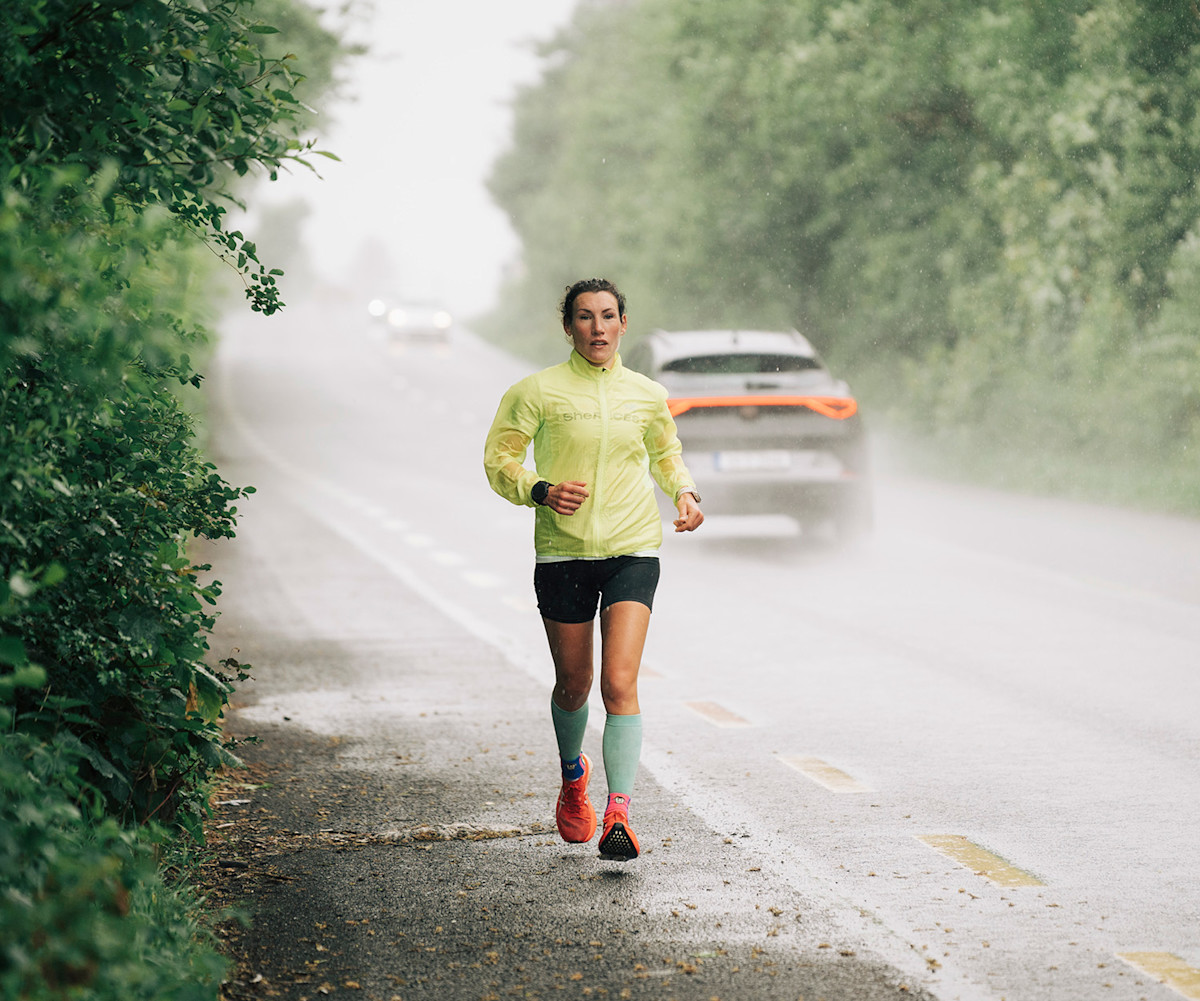
Sophie Power is a name recognized within the ultrarunning community, particularly for her remarkable exploits in pursuit of both personal achievement and broader inspiration for women in sport. In 2018, during the UTMB 105-mile race, a photograph captured her breastfeeding her three-month-old son at an aid station, igniting conversations about the intersection of motherhood and endurance sports. This moment led her to establish SheRACES, fostering an environment that empowers women and girls to challenge themselves through sports.
This year, Sophie sought a challenge that stretched beyond conventional racing formats, aiming not only to cross physical thresholds but also to connect with her own heritage. Her decision to run across Ireland from north to south—347 miles in a bid to break the existing world record of 3 days, 15 hours, and 36 minutes—was deeply personal. For her, breaking this record was about more than mere numbers; it was an embodiment of her roots, linking her to her husband’s Irish heritage and illustrating the powerful motivation that “why” can provide in endurance sports.
Understanding that motivation stems from a well-defined purpose is pivotal for anyone who has pushed their limits. Sophie’s own narrative emphasizes how having a clear ‘why’ can sustain mental fortitude when physical challenges feel insurmountable. She aimed to be a beacon for women and girls, inspiring them to embrace discomfort, redefine their limits, and recognize their potential for resilience in the face of adversity.
Preparing for such a feat went beyond obvious physical training. It involved a nuanced understanding of pacing—an essential skill all endurance athletes develop. When all systems are in sync, pacing translates not just into speed management, but into energy conservation and mental clarity. Sophie’s experience further illustrates this: halfway through her attempt, she faced an unexpected challenge with her knee, not due to inadequate preparation, but because of the unanticipated compounding factor of road camber. This would have derailed many, but she adapted, employing strapping techniques and fostering a mental narrative focused on perseverance over pain.
Sophie also confronted the unpredictable nature of the Irish weather—an element that any seasoned athlete knows can make or break a performance. The journey began amid relentless rain, maintaining a rhythm that only seasoned endurance athletes can appreciate. Adaptability becomes a key tenet in such situations, as does the capacity to recalibrate efforts in real-time. When the weather shifted from rain to heat, some might falter; however, Sophie drew from the expertise of her crew, understanding that the goal was not merely to finish but to do so safely and effectively, even amid extreme conditions. The balancing act between pushing forward and knowing when to heed the body’s warnings is a familiar dance for anyone who has navigated lengthy and arduous events.
Sleep deprivation crept in as a formidable adversary, raising concerns that are common among those who have raced over multiple days. Sophie managed to accumulate minimal sleep—just over two hours in four days—leading to narrowing vision and mental fatigue. Endurance athletes know that the mind can often derail the body; however, Sophie’s use of caffeine strategically illustrates her understanding of energy management. Fostering a dual strategy of quick rest and immediate energy boost is emblematic of a seasoned athlete’s approach to long-duration challenges, where every bit of efficiency counts.
Throughout her attempt, the enthusiasm and support of schoolchildren who lined the route amplified her resolve. Here, the connection between athlete and community is invaluable. The cheers of the young spectators served as a reminder of why engagement in sport, especially for women, is so crucial. In an era where confidence in sporting environments is often challenged, particularly among younger females, Sophie’s journey resonates with a larger narrative—one that emphasizes not just personal achievement, but the collective strength found in community support and mentorship.
Ultimately, Sophie succeeded in her goal, finishing her run across Ireland in 3 days, 12 hours, and 8 minutes—smashing the previous record by over three hours. However, the true realization lay not purely in the accolades or the duration of hours clocked. It was in recognizing that endurance sports are not solely about individual triumph; they can also be a medium for social impact. The emotional intelligence gleaned from her “why”—wanting to inspire the next generation of athletes, especially women—forms a pivotal lesson on the deeper motivations that drive endurance athletes.
As seasoned endurance athletes, we often contemplate our ‘why’—the mental underpinning that fuels us through our most challenging moments. Sophie’s story offers a profound reminder: our endurance is linked not just to our physical systems but also hinges on connecting our personal experiences with broader narratives of community, support, and a drive to inspire others. Carry this takeaway with you on your next long session: every challenge is an opportunity not only to test your limits but also to make an impact in ways that resonate far beyond the finish line.
