


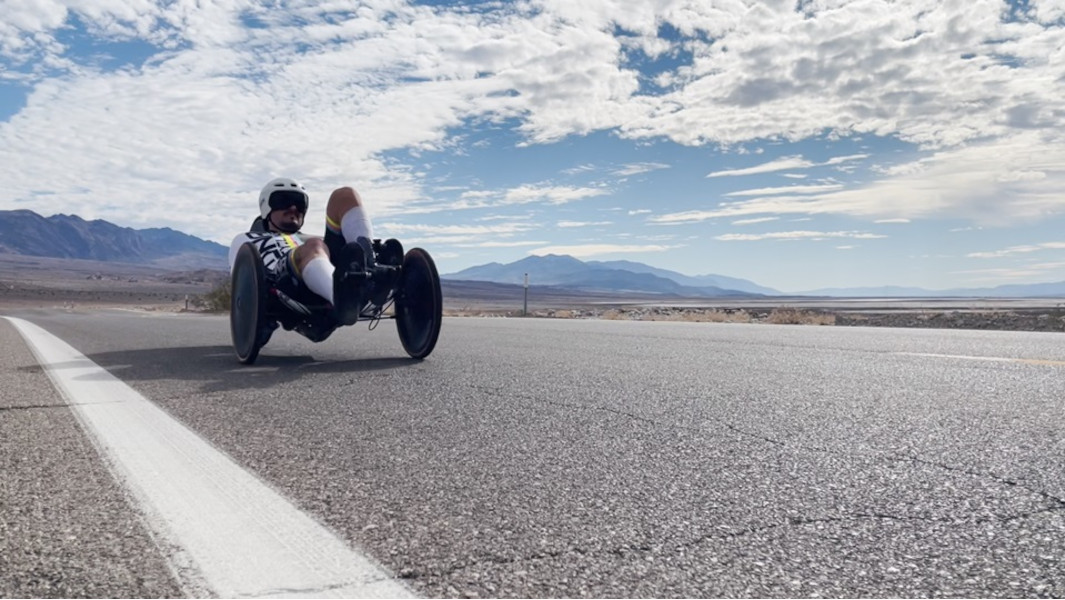
Michael’s journey into endurance cycling began with a proactive approach to a significant life challenge. Confronted with chronic pain and balance issues, he transitioned from conventional two-wheeled cycling to riding a tricycle as a means of reclamation and resilience. For many experienced athletes, the choice to adapt is often crucial. The trike provided stability, permitting him to return to the sport he loved without the constant anxiety of tipping over. This shift highlights an essential lesson: knowing when to adapt and how to create a path toward continued participation is critical in any endurance athlete’s journey.
Initially facing setbacks that would deter most, Michael’s early experiences were imbued with that familiar blend of hope and frustration. The fractured ankle sustained shortly after purchasing his first trike encapsulates that bittersweet progression inherent in endurance sports, where setbacks are often intertwined with forward movement. Every subsequent surgery forced him to confront what felt like a reset of his hard-earned gains—the muscle, the momentum, the confidence. However, this cyclical process of recovery is something every endurance athlete can understand. Progress isn’t always linear, and learning to embrace the iterative nature of training and recovery is integral to long-term performance and satisfaction.
His philosophy of tackling challenges incrementally offers insight into effective training methodologies. Michael approached each ride—whether it was 25 miles or 50—with a clear strategy. Building upon each successful endeavor, he set progressively ambitious goals, culminating in races that tested both his physical limits and mental fortitude. For those entrenched in the endurance community, this incremental approach resonates deeply. Each session, each race, serves not just as an objective crush but as a crucial foundation for future endeavors.
In time, his focus sharpened toward achieving world records, and with that clarity emerged a structured preparation regime. Grounding oneself in a training framework is essential for any serious endurance athlete. The discipline of assessing where you stand, creating a plan, and holding oneself accountable to that process is where success often lies. Michael meticulously logged over 5,500 miles in nine months—a testament to the power of consistency and preparation. It speaks to the underlying tenet that results emerge from the application of effort and strategic planning.
On the day of his record attempt in Death Valley, Michael faced not just a physical challenge but a mental one, too. Like any seasoned athlete, he understood that executing a race plan doesn’t unfold in isolation. External variables, such as weather and unexpected mechanical issues, are ever-present. When winds picked up and the naïve euphoria of the initial miles began to fade, he found himself in the thick of the reality that every endurance athlete knows well: resilience is not just physical.
Michael’s experience at the 100-mile mark illustrates a pivotal moment inherent in many endurance efforts. The support of his team became more critical as circumstances shifted. Resources, both mental and physical, were tested. It’s in those moments when the desire to quit clashes with the need to press on that the character of an athlete reveals itself. The eating of pickles and salty snacks for refueling may seem trivial, yet these are often the unsung heroes of endurance events—small adjustments that can make or break performance in crucial moments.
As he approached the final miles, the knowledge that his finishing time was within reach demanded every ounce of focus and output he had left. The notion of keeping a pace above 20 mph over the last stretch became not just a target but a cognitive anchor. Athletes retrieving their mental strength in the grueling final stretches of races isn’t a new concept; it’s a shared reality. This intimate relationship with discomfort becomes a unique form of mental training that transforms athletes well beyond the racecourse.
Crossing the finish line and achieving his goals, Michael not only secured six records but also embraced the culmination of a process steeped in resilience. His journey reflects something profound: the interplay between physical preparation and mental fortitude is not merely transactional. Each stride, each mile, becomes an opportunity to cultivate self-belief and resilience. In endurance sports, every challenge faced or overcome—and every goal set and reached—contributes to forming an athlete’s identity.
So, as you prepare for your next long session, remember Michael’s story. The road to endurance is rarely straightforward and often laden with complexity. Embrace the peaks and valleys of progress, knowing it’s not just about the finish line but the evolution that occurs along the way. Adaptation, resilience, and support are just as critical as physical training. Carry this forward, and remind yourself that every ride—like every challenge in life—is a step towards something greater, one pedal stroke at a time.
