


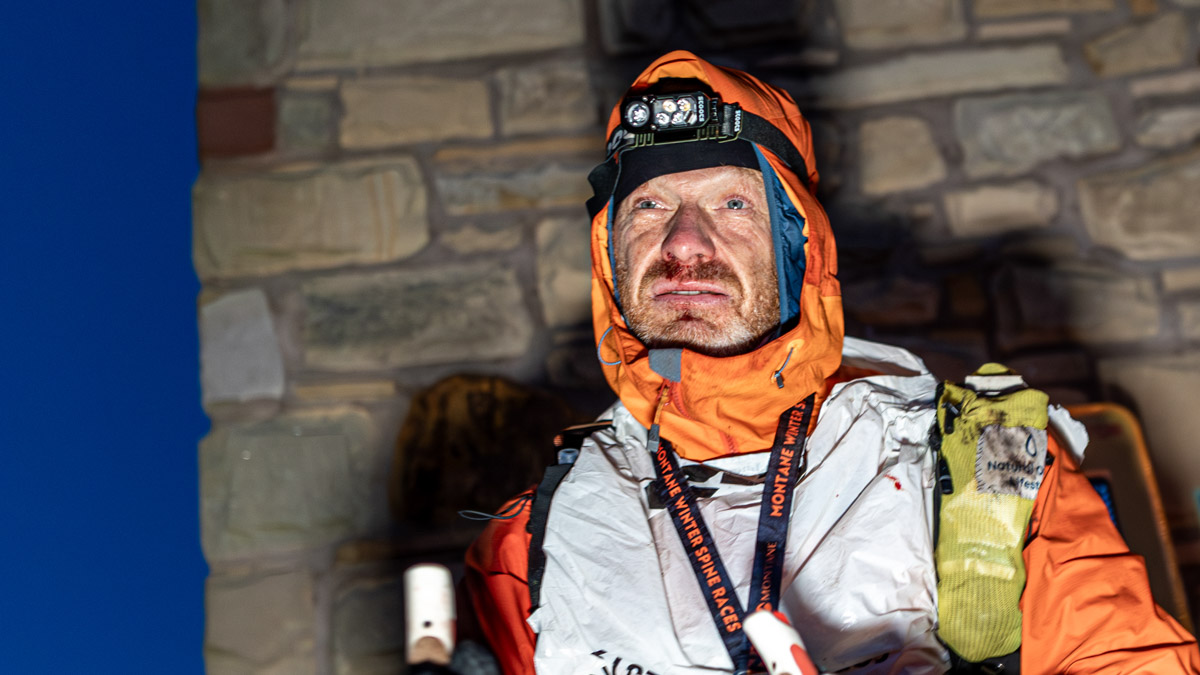
The Winter Spine Race, a challenging ultra-distance event, had participants testing their limits in the 2026 edition held in England. This year, despite many racers still on the grueling 268-mile course, the leaders have completed their journey through harsh conditions, reaching the finish line in Kirk Yetholm, close to the Scottish border. The race commenced on Sunday, January 11, at 8 a.m. local time from Edale, located in Derbyshire at the southern tip of the Pennine Way, often referred to as the “backbone of England.” This iconic route takes adventurers through some of the country’s most breathtaking and rugged wilderness.
The Thrilling Race Unfolds
Both the men’s and women’s categories of the Winter Spine Race witnessed unexpected retirements that ultimately changed the outcomes. The men’s race had Eugeni Roselló Solé from Spain leading for a substantial portion, but fatigue took its toll near the end, allowing Sébastien Raichon of France to take over and secure the win. Raichon finished the race in a commendable 95 hours and 43 minutes. On the women’s side, Finland’s Johanna Antila initially ran alongside Anna Troup from the UK. Nonetheless, Antila faced foot complications, forcing her to withdraw mere miles from the finish, which paved the way for Troup to cross the finish line first in 106 hours and 19 minutes.
Weather Conditions: A Key Factor
This year’s race was notorious for its brutal weather conditions, following Storm Goretti, which brought with it sub-zero temperatures, snow, and fierce winds. The weather conditions fluctuated over the next few days, causing melting snow to create slush and treacherous ice-covered terrain. These challenges ultimately led to a significant number of participants retiring from the race due to the harsh environment. The instability of the ice sheets and snow proved too dangerous for many, pushing seasoned competitors to their limits.
A Closer Look at the Men’s Race
In the early hours leading to the first checkpoint at Hebden, located 46 miles from the start, Chris Cope from the UK set the pace, finishing the checkpoint in 9:03 hours. Following him were Eugeni Roselló Solé and James Hargreaves, with Roselló Solé looking to cement his experience in the race after previously finishing in 2013 and earning second place in 2017. However, Cope and John Kelly both unfortunately had to retire early on due to injuries sustained on the challenging ice-covered course.
Transitioning Tactics and Leading the Pack
As the race progressed, Roselló Solé maintained his lead, reaching the second checkpoint at Hawes, which is situated 109 miles into the race, in a respectable time of 25:25. However, as the race wore on, his lead began to dwindle. Notably, by Langdon, the 152-mile mark, Sébastien Raichon had advanced into a solid position, moving up the ranks deftly after initially lagging behind. He finished the day at the third checkpoint significantly behind Roselló Solé, yet still in contention for a top finish.
Drama at the Finish Line
As competitors pushed towards the latter checkpoints, many succumbed to the extreme conditions. Roselló Solé reached Bellingham, having covered 224 miles in 66:19, but after only 40 miles left to go, fatigue set in, and he had to withdraw at Burness with 240 miles under his belt. The unfortunate DNF left the door open for Raichon to seize victory, which he accomplished in 95:43, followed closely by James White in second place and Hargreaves securing third.
The Women’s Race: A Battle of Endurance
Meanwhile, the women’s competition similarly took an unexpected turn. Johanna Antila emerged initially as the frontrunner, reaching the first checkpoint ahead of her competition. Anna Troup, well-experienced in the Summer Spine circuit, quickly made up ground, and the two joined forces to tackle the race together. Upon reaching the third checkpoint, they realized just how far they had outpaced their competitors.
Unexpected Twists and Triumphs
As fatigue compounded with the relentless race conditions, Antila had to withdraw, leaving Troup to press on solo. In the end, Troup finished with an impressive time of 106:19, marking her as a dual champion, having previously won the Summer Spine editions. Fiona Horsfield took the second spot, finishing at 112:48, while Sophie Grant, making her Winter Spine debut, claimed third in 117:32.
Final Results and Reflections
The Winter Spine Race continues to be a benchmark of endurance and resilience in harsh environments. Despite the unpredictability of the weather and course conditions, the event showcases not just the physical prowess but also the mental fortitude required to undertake such a demanding challenge. As more participants cross the finish, we will continue to track the race’s results, further highlighting the incredible journey each competitor undertakes in this grueling ultra-distance competition.
2026 Winter Spine Race Results
For full results, you can visit the official tracking page here.
