


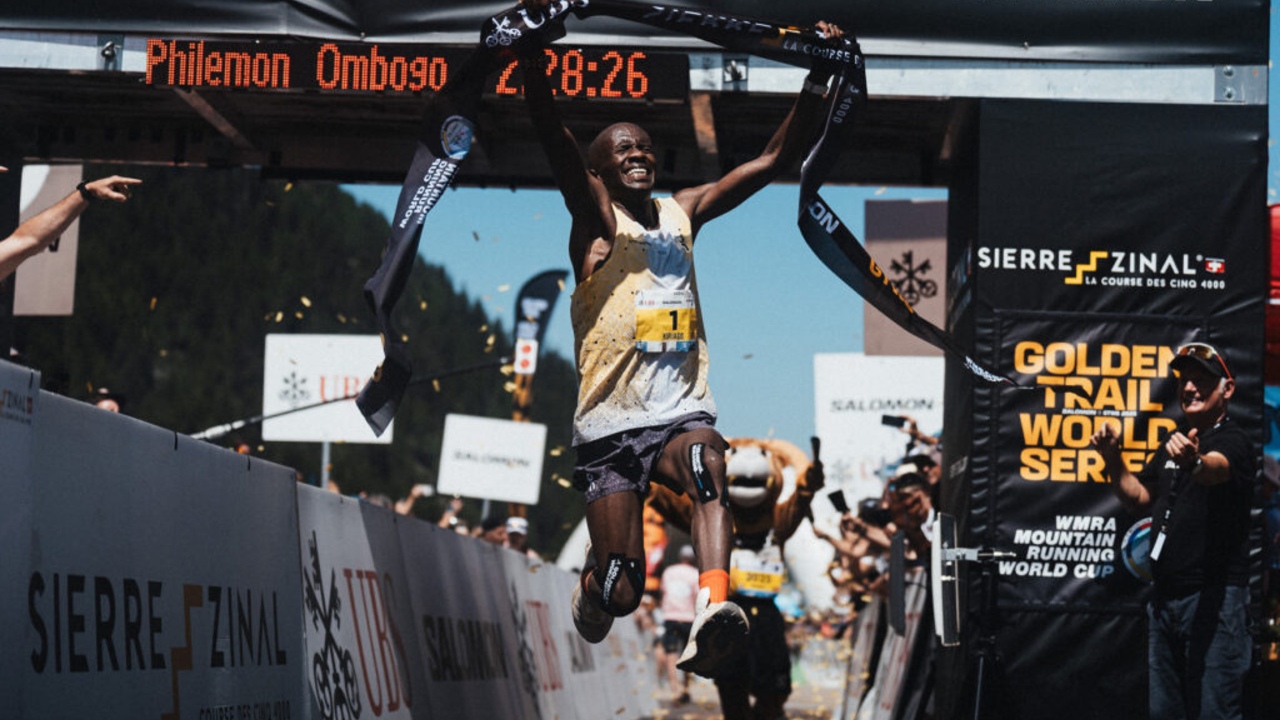
The Sierre-Zinal race, an iconic 31-kilometer challenge marked by over 2,200 meters of elevation gain, continues to be a proving ground for elite trail runners. This year, both Philemon Kiriago and Joyline Chepngeno secured their second victories in this prestigious event, reaffirming their positions within the trail running elite. Their performances serve as case studies in race strategy, pacing, and elevation management—key components for any runner planning to tackle mountainous ultras.
Kiriago, representing Run2gether On Trail, initiated his race with a distinct intention to establish a winning pace from the outset. This tactic is increasingly favored among runners looking to secure a lead early on, a strategy that necessitates an intimate understanding of one’s physical limits, particularly on courses characterized by immediate substantial climbs. In the initial eight kilometers towards Ponchette, the competitors face a steep ascent that can quickly deplete energy reserves. Kiriago’s approach demonstrates the importance of maintaining a strong initial pace while being mindful of how that effort might compound over a longer race, especially while running in a competitive pack that includes formidable athletes like Josphat Kiprotich and Adrien Briffod.
As the terrain shifted to more moderate gradients, Kiriago’s control became evident. The “Fast & Furious” section—a series of rolling hills that present their unique challenges—requires not only strength but also tactical navigation. In this segment, the balance between speed and energy conservation becomes crucial, underscoring the importance of pacing strategies in mountainous races. Kiriago’s ability to hold his position while a group of skilled chasers closed in reflects a nuanced understanding of the dynamics at play during long races: how to manage efforts while adapting to shifting race conditions.
Joyline Chepngeno’s journey mirrored this complexity. Though she faced robust competition early in the race, especially from Caroline Kimutai, her eventual ascendancy underscores critical race strategies such as the power of maintaining focus during challenging sections. Chepngeno’s ability to navigate climbs and effectively time her overtaking maneuver near Chandolin illustrates the advantage of carefully planning when to conserve energy versus making opportunistic moves. Her decisive shift to the lead not only emphasized her competitive edge but also highlighted a common theme in successful ultra performances—patience in execution leading to a surge at key moments.
The course’s demanding climbs and switchbacks also posed significant challenges. Both Kiriago and Chepngeno embraced the rigorous nature of altitude gain and the subsequent descents, thinking critically about how each elevation change could affect their pacing strategy. Maintaining form in both ascent and descent phases is vital for longevity in mountain races, where downhill running can often lead to musculoskeletal strain if not executed with technique and control. Their performances serve as a reminder that the terrain does not merely dictate pace—it dramatically shapes race dynamics and outcomes.
In addition to performance metrics, the broader implications of Sierre-Zinal may influence other mountainous races on the calendar. The race serves as a benchmark, especially for athletes seeking qualification for significant events like the UTMB. As one analyzes their results, metrics such as splits and elevation profiles can inform training tactics geared towards similar altitude challenges. Sierre-Zinal positions itself as not just a race but as a rich source of insights into the skills necessary for success in higher-stakes ultramarathons.
Athlete insights in the aftermath of their performances also reveal the psychological and strategic layers that underpin effective race preparation. Kiriago’s ambitions to achieve five victories at Sierre-Zinal resonate with seasoned runners eyeing long-term goals amidst the features of high-stakes competition. His pointed reflection on dreaming of multiple wins unveils the athlete mindset—one that recognizes the importance of mental approach in race preparation. Substantial satisfaction comes not just from singular victories but from a sustained effort and an evolving narrative within the sport.
With the Golden Trail World Series season advancing towards the Ledro Sky Trentino Grand Finale in October, the implications of performances at Sierre-Zinal reverberate. As runners consider their racing calendars, integrating lessons from races like Sierre-Zinal is critical for performance planning. Elevation gain should become a focal point in training regimes, understanding not just the physical requirements but the mental endurance needed to maintain optimal pacing through diverse terrains.
Trail and ultrarunners should take note of the race results from Sierre-Zinal as they navigate their training cycles, particularly regarding how to approach high-elevation sections and maintain competitiveness in ultra races. Every aspect of these performances feeds into a broader understanding of race dynamics that can shape preparation for future challenges.
A key takeaway for serious mountain ultrarunners is the necessity of strategic elevation management. The careful balance of strength and pacing on climbs, coupled with tactical decision-making during critical moments of the race, can provide the edge needed to excel in demanding mountainous ultras. Training with these factors in mind will bolster readiness for both the physical and strategic challenges that high-altitude events present.
