


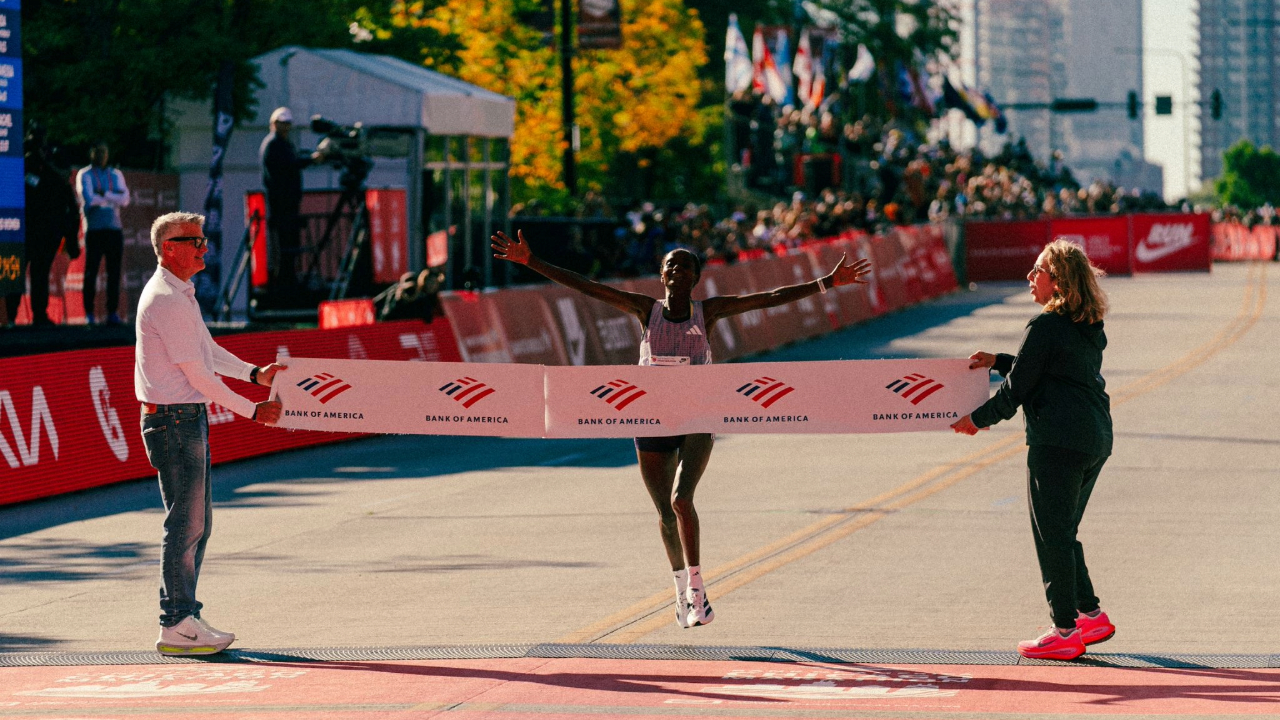
Two remarkable performances recently unfolded at the Chicago Marathon, showcasing not only athletic prowess but also strategic execution vital for seasoned trail and ultrarunners. Jacob Kiplimo and Hawi Feysa emerged as dominant figures, but the race also offered valuable insights for those focused on mountain ultras and long-distance trail events. For ultrarunners, understanding the nuances of race pacing, weather conditions, and competitors’ strategies is paramount for competitive success.
Kiplimo’s performance in the men’s race was particularly striking—he clocked a time of 2:02:23, making it the eleventh-fastest marathon in history. His result serves as a reminder of the significance of pace management and race strategy, especially in the context of mountain races where terrain can shift performance dynamics. Competing in only his second marathon, Kiplimo demonstrated an ability to balance speed with endurance, a trait that ultrarunners should prioritize in their training regimens. His initial pacing of 28:25 for the opening 10k might have led some to suspect a record-setting outcome, but he ultimately had to recalibrate his approach as the race evolved. This adaptive strategy—recognizing when conditions demand a more measured pace—is critical for runners facing unknown variables in mountain terrain.
The skill of decision-making during a race was further highlighted as Kiplimo dropped his pacers at the 30-kilometer mark, showcasing not only fitness but also mental fortitude. He timed his surge carefully, moving decisively to distance himself from competitors, emphasizing the importance of knowing both when to conserve energy and when to exploit marginal gains. This tactical awareness is vital for ultrarunners navigating varied elevation changes and unpredictable weather conditions. Moreover, understanding how to listen to one’s body while assessing the competition can lead to a race-winning move, just as it did for Kiplimo.
Conner Mantz’s performance, finishing fourth yet achieving a new American marathon record of 2:04:43, serves as another instructive moment for experienced runners. His accomplishment adds depth to discussions about race pacing, injury management, and mental resilience. Mantz’s record-breaking run followed weeks of careful preparation and strong performances at earlier races, illustrating the necessity for ultrarunners to build consistent training cycles that incorporate both speed and endurance work. This could mean integrating tempo runs and hill workouts while also ensuring ample recovery time to maintain overall health and race fitness.
In the women’s race, Hawi Feysa’s commanding lead, finishing at 2:14:56, offers insights on the critical nature of early pacing and endurance management. Taking charge from the outset, Feysa’s strategy ensured that she built a significant buffer over her competitors. This is particularly relevant for ultrarunners, who sometimes hesitate to assert themselves early in a race due to assumptions about longevity. However, as demonstrated by Feysa, setting an early pace that aligns with one’s potential can negate later pack dynamics that often complicate race execution in trail environments. Adopting a proactive approach, while maintaining awareness of one’s current fitness level, may yield advantageous results.
For athletes like Feysa and Kiplimo, the ideal racing conditions observed in Chicago served as an optimal setting for performance. These conditions remind experienced runners of the crucial relationship between weather, terrain, and strategy. The subtle implications of wind or gradient changes require a robust acclimatization process, underscoring the importance of simulation in training. Incorporating strategies that consider these factors can help ultrarunners sharpen their race-day tactics, ultimately leading to improved performance in less predictable circumstances.
When assessing gear choices—a vital component of any long-distance race—it’s important to remember the role technology plays in influencing performance. The Chicago Marathon demonstrated how even small innovations can affect comfort and speed. While not specifically highlighted in this race, the trend toward lighter footwear and enhanced moisture-wicking fabrics remains pertinent to ultrarunners as they seek optimal efficiency on rugged terrain. The reliability of gear, particularly in terms of fitting and weight, can often be the deciding factor in an athlete’s performance, especially in a landscape where fatigue is compounded by environmental challenges.
In summary, the outcomes from the Chicago Marathon offer vital lessons for ultrarunners preparing for mountain courses. Key takeaways include the importance of pacing and adaptive strategy, the need for consistent training across various conditions, and the critical evaluation of gear choices. Ultimately, the focus should be on developing a solid understanding of one’s own capabilities while remaining fluid in executing race strategies, especially as conditions and competition evolve during long-distance trail events. This adaptable mindset, combined with learned experiences from high-stakes races, can enhance performance significantly in the mountain ultra realm.
