


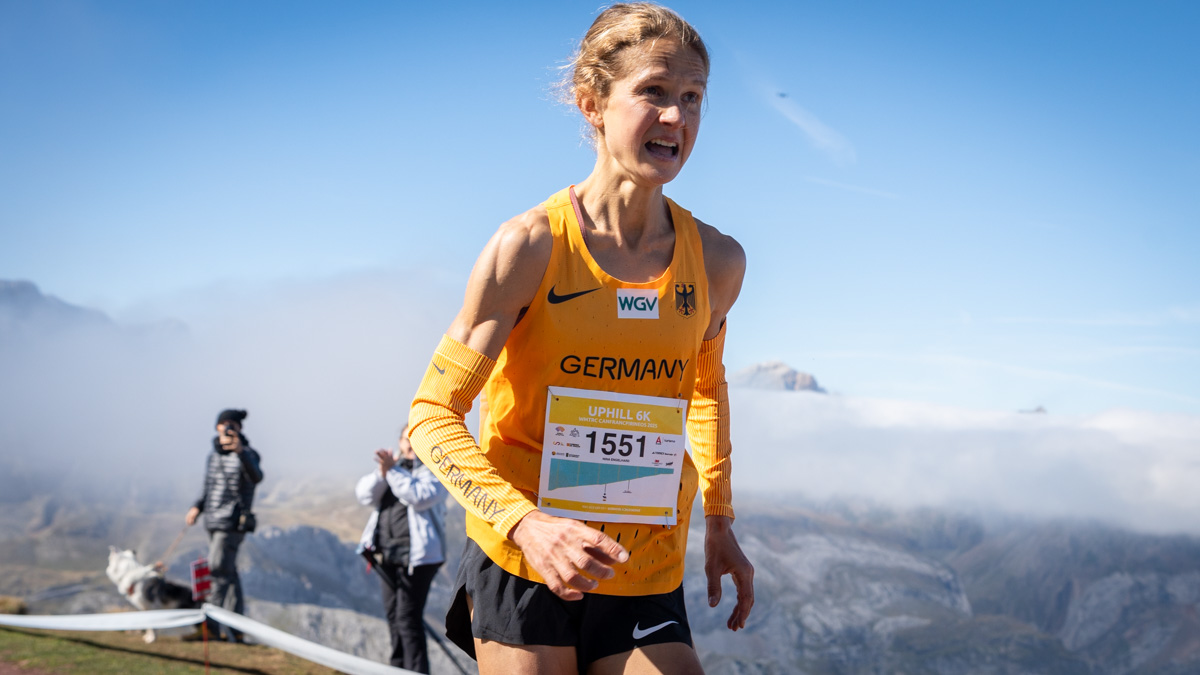
At the 2025 World Mountain Running Championships held in Canfranc, Spain, Nina Engelhard emerged as a formidable contender in the realm of mountain running, showcasing remarkable tactical execution and a unique approach to training that diverges from the conventional norms typically seen in elite circles. Engelhard’s victories in both the Uphill and Up and Down races not only solidified her status but provided valuable insights for seasoned trail and ultrarunners aiming to enhance their performance in similar mountainous terrains.
Engelhard, a 28-year-old environmental engineer from Kassel, Germany, experiences varied training that defies standard expectations. Instead of adhering to structured weekly mileage, she runs between 50 to 70 kilometers, complementing her regimen with swimming, rowing, and cycling. This versatility allows her to maintain overall fitness while emphasizing enjoyment and flexibility in her training. Engelhard opts against the presence of a coach, self-managing her training to prevent the imposition of rigid schedules. Many runners might find this approach questionable, yet her success demonstrates that it fosters a positive relationship with the sport, which is crucial for long-term performance. Furthermore, Engelhard’s lack of reliance on timing devices encourages instinctual pacing, enabling her to respond dynamically to race conditions without the pressure of adhering to predetermined splits.
Her recent performances unveil tactical considerations that can be instrumental for other trail and ultrarunners. At the World Championships, Engelhard exhibited the ability to confront various mental challenges, notably the inevitable fatigue experienced during long pushes uphill. It’s crucial to understand that even elite athletes can experience fluctuations in physical condition and mental fortitude throughout a race. Engelhard’s victory in the Uphill event was attributed to her capacity to handle discomfort and maintain focus despite not feeling her best. This highlights the importance of mental resilience, training both the body and mind to perform under pressure, key for race day scenarios.
Moreover, Engelhard’s strategic field positioning serves as a lesson in pacing strategy. Establishing an early lead in the uphill race placed her in a position of control, allowing her to dictate the pace and engage the competition on her terms. For competitive ultrarunners, particularly in mountainous events, initiating a race strong can be a double-edged sword; it may either solidify a commanding lead or risk premature fatigue. Thus, evaluating personal capabilities to either assert dominance or bide time is a nuanced decision that can make or break an ultra.
Engelhard’s races were executed without the distraction of social media or extensive public engagement, highlighting the merit of an undistracted focus on personal goals. By prioritizing her own enjoyment over external validation, she embodies the essence of intrinsic motivation, a potent element for any runner, especially those training for challenging ultra distances. It reflects the importance of developing a personal rationale for why one runs; without it, the grind of training can often lead to burnout.
The courses at championships often feature diverse altitudes and technicality, compelling athletes to adapt their training accordingly. Runners preparing for events similar to Engelhard’s should incorporate varied elevations and terrains into their workout regimes. Understanding how to transition between climbing, descending, and technical navigation requires tailored workouts that mirror the demands of competitive courses. Integrating hill repeats, technical descents, and long runs with significant elevation gain will prepare the body for the rigors of racing, as well as cultivate confidence in managing pace when fatigue sets in.
Additionally, Engelhard’s reliance on cross-training supports a balanced approach to fitness, which can mitigate injuries commonly associated with high-mileage training. This multifaceted strategy encourages runners to maintain a broader athletic base, reducing the risk of overuse injuries while still maximizing endurance and strength specific to their events.
The essence of Engelhard’s preparation and racing strategies suggests a fundamental principle: the ability to perform in competitive mountain races emanates from a blend of personal enjoyment, mental fortitude, and strategic pragmatism. As one pursues the rigors of mountainous ultras, remember to prioritize adaptability, whether in training methods or race strategies. As demonstrated by Engelhard, embracing non-traditional approaches can yield significant rewards, offering both competitive advantage and profound personal satisfaction.
For ultrarunners, the crucial takeaway from Engelhard’s approach is to cultivate a training philosophy rooted in enjoyment and personal engagement, pairing it with strategic insights gained from race execution. By developing a responsive mindset and building a holistic fitness approach, athletes can enhance their performances while remaining true to their love for the sport.
