


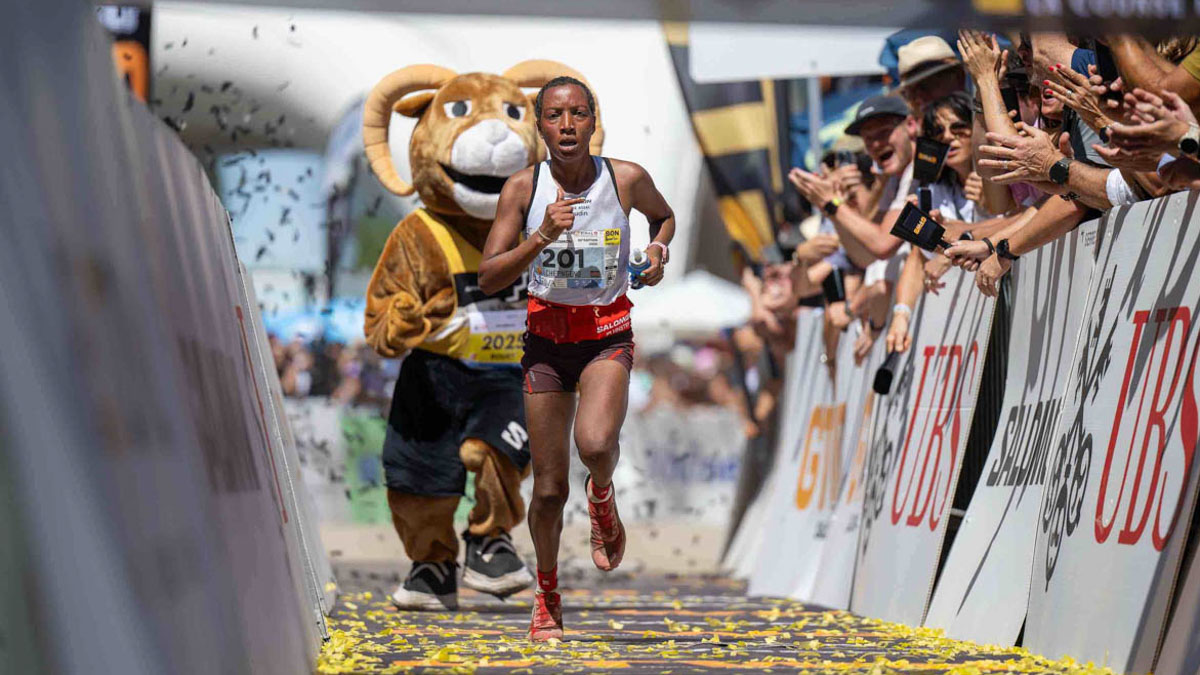
The recent Sierre-Zinal race in Zinal, Switzerland, a vital event in both the Golden Trail World Series and the Mountain Running World Cup, showcased elite performances that carry significant implications for both training and strategy for experienced trail and ultrarunners.
Covering a demanding 31 kilometers with 2,200 meters (7,200 feet) of elevation gain, this course is known for its rigorous terrain, which can challenge even seasoned runners. The race’s competitive landscape not only highlights individual performances but also offers valuable insights into pacing and race-day tactics.
Philemon Kiriago of Kenya emerged victorious with a time of 2:28:45, a mere fraction off his previous year’s winning time. Kiriago’s strategy involved steady management of energy throughout the earlier climbs, allowing him to maintain speed on the downhill portions, which are often critical in determining final outcomes in mountain races. His win underscores the importance of understanding how to navigate both the ascents and descents efficiently. Notably, his experience demonstrates that maintaining a controlled effort at key elevations can pay dividends when the terrain shifts.
Rival Patrick Kipngeno, another Kenyan powerhouse, finished just behind Kiriago in 2:29:08. His performance, characterized by patient climbing before unleashing speed downhill, illustrates how crucial the final descent can be in a mountain race. This tactical approach is particularly relevant for athletes looking to optimize their performance across varied terrains—an important consideration for those training for events that mirror the steep, technical descents found in ASPIRE and UTMB courses.
Adrien Briffod from Switzerland initially set a blistering pace, leading for the first part of the race before ultimately finishing fourth in 2:32:06. His early lead highlights a strategic dilemma faced by many mountain runners: the balance between aggressive pacing and energy conservation. While early speed can establish a psychological edge, it can also lead to an early cratering in performance as the course’s challenges intensify. This aspect of pacing is crucial for ultrarunners, as it reinforces the need for a well-considered strategy that accommodates both speed and sustainable effort.
In the women’s race, defending champion Joyline Chepngeno also showcased the effectiveness of strategic mountain racing. Winning again in 2:54:49, Chepngeno demonstrated strong climbing skills and the ability to maintain her lead once established. Her performance illustrates the impact of making decisive moves early in the race—particularly for runners who can leave their competition behind during the climb. For those preparing for races with substantial elevation, maintaining aggressive climbing capabilities while conserving energy for later stages can be a determining factor between podium placements and solid completions.
Caroline Kimutai, Chepngeno’s closest competitor, demonstrated notable pacing strategy by improving her performance significantly from earlier races, finishing in 2:55:31. This denotes the importance of race experience and the role it plays in elevating one’s ability to gauge personal limits while adjusting to the competition around them. Ultrarunners should take note of how incremental improvements over time can lead to significant gains, particularly through exposure to various race-day strategies and environments.
As athletes continue to evolve their training regimens and strategies, the role of gear and race innovations cannot be overlooked. Enhanced footwear technology, designed to provide better grip and stability during steep descents, can increase confidence for runners tackling similar mountain routes. Choosing the right shoe that blends cushioning for long climbs with defensiveness on descents becomes integral, especially given that shoes can greatly affect performance over distances saturated with both elevation gain and loss.
The broader implications of Sierre-Zinal extend beyond immediate performance. As trail and ultrarunner communities expand, upcoming events such as the October finale of the Golden Trail World Series in Italy and the Mountain Running World Cup finals in Slovenia are on the horizon. Understanding the competition landscape allows athletes to plan not only their training but their race entries, ensuring they align with qualification paths for prestigious events such as UTMB.
In terms of personal athlete insights, viewing races like Sierre-Zinal from a tactical lens reveals the importance of adaptable strategies. As terrain varies markedly, the ability to recalibrate pace and energy accordingly can define race outcomes. Runners should train with varied terrain in mind, leveraging both uphill intervals and downhill techniques, to prepare mentally and physically for the shifts that come during competition.
Ultimately, for experienced ultrarunners, the takeaway from recent races is the ongoing importance of strategy and adaptability in training and racing. Hollowing out strong approaches to pacing, mastering descents, and understanding personal limits can be crucial to not only finishing well but excelling in some of the most challenging mountain races across the globe. Runners are reminded that every race provides a learning opportunity, and refining strategies based on performance in significant events like Sierre-Zinal can yield long-term benefits in their competitive endeavors.
