


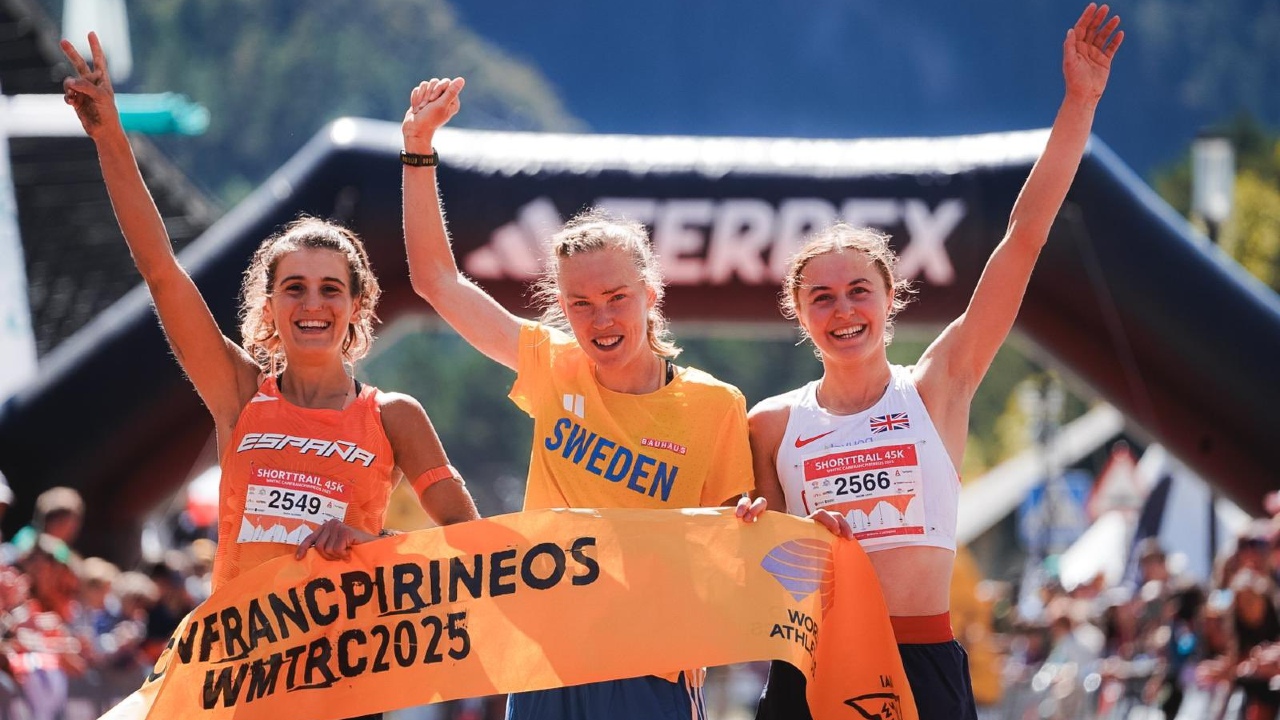
Frédéric Tranchand and Tove Alexandersson emerged victorious at the Short Trail World Championships held in the challenging terrain of Canfranc Pirineos, Spain. Their performances not only showcased their exceptional athleticism but also highlighted crucial strategic elements that can inform the approach for experienced trail and ultrarunners.
In the men’s event, Tranchand displayed a powerful start that wasn’t originally part of his race strategy. He found himself leading from the beginning of the first climb, which ultimately dictated the dynamics of the race. Manuel Merillas of Spain managed to stay within striking distance early on but differed markedly from Norway’s Stian Angermund, who fell out of contention as the race progressed. The ability to manage pacing and maintain form under pressure proved vital. Tranchand ultimately finished the 45-kilometer course in 4:42:10, carving out a 3:23 margin over Merillas, who secured team gold for Spain along with his teammates, Andreu Blanes and Alain Santamaria. For ultrarunners, this underscores the necessity of tactical adaptability. Starting out aggressively can sometimes lead to unforeseen advantages, provided the athlete has the fitness and mental fortitude to sustain the lead.
A particularly interesting aspect of Tranchand’s victory was his extensive background in orienteering, which he indicated provided him with an edge in navigating less-traveled pathways. The terrain of Canfranc Pirineos is rugged and varied, meaning that the ability to read the landscape and make quick decisions could be the difference between maintaining momentum and faltering. Runners should consider integrating navigation drills into their training to enhance their ability to manage diverse terrains, especially when course markings may be sparse or visibility low during races.
Similarly, Alexandersson’s dominant performance in the women’s race provided insights into the importance of maintaining a strong early pace. She expanded her lead significantly early on and continued to distance herself from competitors, finishing the race in 5:04:20, an impressive 33:55 ahead of second-place Sara Alonso. The strategic use of the first few kilometers to establish a commanding lead allowed Alexandersson to focus on sustaining effort rather than engaging in tactical battles later in the race. This approach may resonate with seasoned athletes who understand the benefits of establishing psychological advantages over competitors, particularly in events where race dynamics can shift rapidly.
Moreover, Alexandersson’s preparation was meticulous. She emphasized her focused training regimen over a couple of months leading up to the event. For ultrarunners, this serves as a reminder of the value of specific, targeted training cycles. Prioritizing course-specific sessions, whether they involve steep terrain or technical sections, can enhance familiarization with race-day conditions and equip runners with the necessary skills to handle unexpected shifts in race dynamics.
The team standings reflect an interesting aspect of the competition that may influence training discussions moving forward. The team outcome was determined by the combined times of the top three runners, showcasing that individual performance is not the sole determinant of success in trail events. Runners should contemplate their role within a team context, emphasizing the importance of strategic pacing not just for personal finishes, but also for team efforts. Developing a race strategy that accounts for both individual and team goals can elevate overall performance during competitions.
Gear choices also merit attention, particularly in light of the evolving innovations in the ultrarunning space. While the specifics of what equipment the athletes chose were not highlighted in this instance, the nature of the course suggests reliance on lightweight, durable gear optimized for mixed conditions. As technology advances, runners should remain aware of innovations that may enhance reliability or reduce weight without sacrificing performance. The benefits of well-chosen gear can be substantial in terms of comfort and efficiency over long distances in challenging terrain.
Tranchand’s experience with cramps late in the race is a practical reminder of the physiological stresses that emerge in prolonged efforts, especially in mountainous environments. Runners are encouraged to prioritize nutrition and hydration strategies leading into and during races. A finely-tuned approach to electrolytes and fluids can mitigate cramping risks and maintain pacing, particularly in the latter stages when fatigue becomes a significant factor.
Ultimately, the key takeaway from the Short Trail World Championships is the importance of adaptability and strategic planning. Runners should prepare to adjust their plans in response to race conditions, competitor actions, and personal strengths while continuing to refine their nutrition and gear choices. Training for mountain ultras should integrate a blend of pacing strategies, technical terrain navigation, and team dynamics. Emphasizing these aspects can contribute to not only better individual performances but also a stronger collective impact in team-oriented events.
