


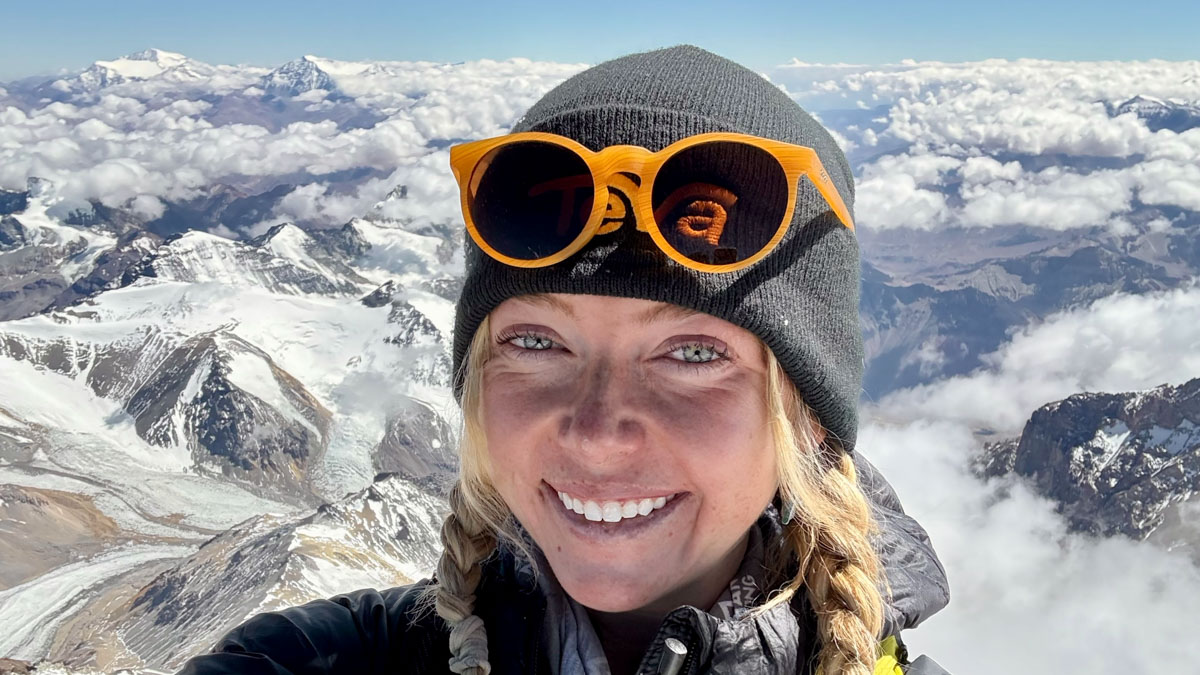
In the early hours of January 28, 2025, American ultrarunner Erin Ton made a significant mark in the realm of mountain running by achieving a new women’s unsupported fastest known time (FKT) on Aconcagua, the highest peak in South America. Ton completed the ascent and descent in a striking 6 hours and 33 minutes, besting the previous women’s supported FKT of 8 hours and 17 minutes set by Slovakia’s Lenka Poláčková just weeks earlier. Such feats not only highlight the evolving nature of speed ascents but also suggest an interesting shift in training methodologies and strategies among elite athletes.
Ton’s ascent time of 4 hours and 50 minutes set a new standard, eclipsing the previous best of 7 hours and 58 minutes established by fellow American Rachel Boim in a supported capacity in 2023. The importance of acclimatization and pacing cannot be understated in high-altitude endeavors, particularly on routes like Aconcagua’s standard approach, which gains approximately 8,500 feet over 8.7 miles—an elevation and distance mix that demands both fitness and tactical awareness.
What is particularly noteworthy is Ton’s ability to adapt to the altitude, noting a pronounced difference as she climbed, recognizing how the demands change above certain elevations. For experienced runners focusing on similar high-altitude races, this experience underscores the necessity of thorough acclimatization prior to challenging ascents. Creating a comprehensive training plan that not only builds endurance but also specifically prepares the body for diminished oxygen levels at high elevations is critical for performance.
In her own account, Ton described the weather conditions as favorable but cold, leading her to layer appropriately, which is a key consideration for runners preparing for mountainous terrain. Weather can dramatically influence performance and decision-making in mountain races, affecting everything from pace to safety. Ton’s experience illustrates the importance of adapting to changing conditions without becoming too overburdened by gear that can slow one down. A strategic approach to layering, informed by forecast data and personal comfort, can make a significant difference.
Moreover, Ton’s background in FKT pursuits reveals a pattern that serious mountain ultrarunners should heed—success often hinges on meticulous planning and experience across various terrains. Having spent substantial time training in South America, including setting FKTs on other mountains, her preparation underscores the value of specificity in training. Engaging in diverse elevation profiles and weather conditions can yield insights that bolster performance during key races.
As Ton aims for a longer FKT version of the Aconcagua course, a 40-mile round-trip route with 13,250 feet of elevation gain, it emphasizes the necessity of adapting one’s training to the specific demands of target events. For those considering similar high-mountain ultras, understanding the anticipated course and training accordingly with regards to both distance and vertical gain can enhance performance. This not only prepares the body physically but also familiarizes the mind with the challenges ahead.
Ton has accumulated an impressive portfolio of 179 FKTs, with her Aconcagua achievement possibly marking her 180th and 181st efforts. Such dedication to pushing the boundaries and exploring new routes provides seasoned runners with a broader perspective. The commitment to seek out new challenges while refining technique and strategy can serve as a cornerstone for those looking to elevate their racing game in the mountains.
Particularly important for those pursuing high-altitude records is the understanding of environmental factors. Ton pointed out the rapid change in temperature she experienced, stating that it quickly became warm as she descended, which emphasizes the need for runners to be well-acquainted with the microclimates they will encounter during races. A strategy that accounts for temperature fluctuations can aid in maintaining optimal performance and comfort.
Ton’s climbs across varying peaks in Ecuador, including Illiniza Norte, Cotopaxi, and Rucu Pichincha, illustrate another crucial aspect of mountain racing: diversified training environments. High-altitude races often require a unique set of physiological adaptations, and varying these environments increases a runner’s ability to perform well in diverse circumstances. Engaging with multiple local altitudes can enhance one’s efficiency and adaptation, yielding significant benefits when it comes time to race.
Ultimately, Erin Ton’s latest endeavors serve as a valuable lesson in positioning oneself for success in mountain ultrarunning. The combination of rigorous preparation, the adaptability to altitude, and the strategic implementation of gear can play pivotal roles in achieving one’s goals in the mountainous terrain. For experienced ultrarunners looking to optimize their performance, the takeaway is clear: invest in specialized training that reflects the specifics of high-altitude racing conditions, refining not just physical capabilities but also mental fortitude. Understanding these dynamics can create a strategic advantage crucial for success in the pressing challenges that lie ahead in mountain ultra races.
