


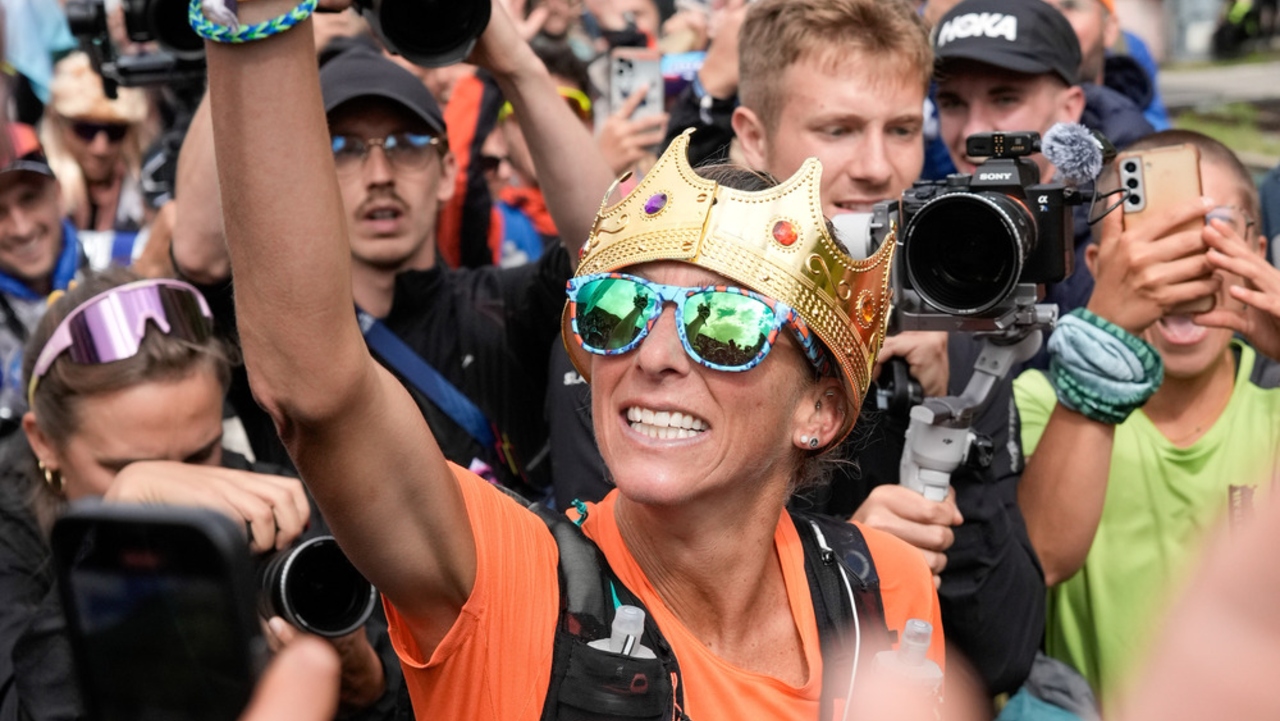
Courtney Dauwalter, often regarded as a pivotal figure in the world of ultrarunning, is preparing for the California International Marathon (CIM) scheduled for December 7th. At 40 years old, her accolades are numerous; she has won all major ultrarunning events, frequently dominating them. In 2023, she made headlines by securing the ‘triple crown’—a feat that includes victories at the Western States, Hardrock 100, and Ultra-Trail du Mont-Blanc (UTMB) in the same year.
Dauwalter’s evolving focus on road marathon training is noteworthy for ultrarunners who may be considering similar transitions. She recently reflected on her experience training for a road marathon, attempting to extract more speed from her seasoned ultra legs for this shorter distance. This pursuit illustrates a critical concept in endurance training: adaptability. While trail and ultramarathon training hone specific muscle groups and cardiovascular profiles, incorporating faster-paced runs can yield benefits even in longer events.
Her recent run at the Twin Cities Marathon in October serves as an insightful case study. Returning to the site of her marathon debut in 2009, she completed the race in 2:49:54, placing seventh among women. Despite challenging weather conditions, her pacing strategy was effective, revealing the significance of familiarity with race courses and personal history in performance. For ultrarunners, returning to previously raced courses can foster confidence and strategic insight, further emphasizing the importance of experiential knowledge in race outcomes.
The upcoming CIM offers distinct advantages for those considering its merits for Boston Marathon qualification and beyond. As a historically fast course with a net elevation drop of 366 feet, it presents an opportunity for strong performances. Its consistently fast pace reflects the demand for efficiency in training regimes. Dauwalter’s preparation for this course underscores the potential benefits of specific training adaptations. Thinking critically about how to prepare for a net-downhill course might encourage ultrarunners to prioritize balance and maintaining form through varied terrain, which can translate to performances in mountain races.
Additionally, the broader context of competing events, such as Valencia Marathon taking place concurrently with CIM, serves as a reminder of the high level of competition in marathon settings. Understanding the pacing requirements and race-day strategies of peers competing at this elite level may inform training protocols for all distance events, be it road or mountain.
Gear innovation is also an element that ultrarunners should monitor. Advances in footwear, particularly those engineered for specific terrain and distance, are vital. Footwear designed for marathon running often emphasizes lightness and responsiveness, differing from the more rugged features typically seen in trail running shoes. Runners should pay close attention to these elements, as the choice of shoe can impact overall performance, recovery, and injury prevention.
Dauwalter’s experience highlights another tactical aspect: the importance of diversifying training modalities. In her own words, she is “trying hard to coax a litttttle more speed out of these ultra legs” for a marathon distance. Ultrarunners can glean that integrating speedwork and tempo runs into their training regimens might yield significant benefits, allowing them to maintain pace and endurance during long races. Emphasizing the necessity of speed in ultrarunning underscores the natural evolution of training as one prepares for more demanding courses.
As ultrarunners look forward to their seasonal training schedules, embracing the radical variability of different race types could be a key takeaway. The need for adaptability in training methods, pacing strategies, and mental preparedness for various race profiles remains paramount. Emphasizing speed, managing fatigue, and learning from varied distances can prepare athletes for ultramarathon success. Ultimately, the message from Dauwalter’s trajectory is straightforward: to thrive in diverse race environments, one must be deliberate and adaptable in training approaches, recognizing how lessons from various types of races contribute to overarching competitiveness in mountain ultras.
