


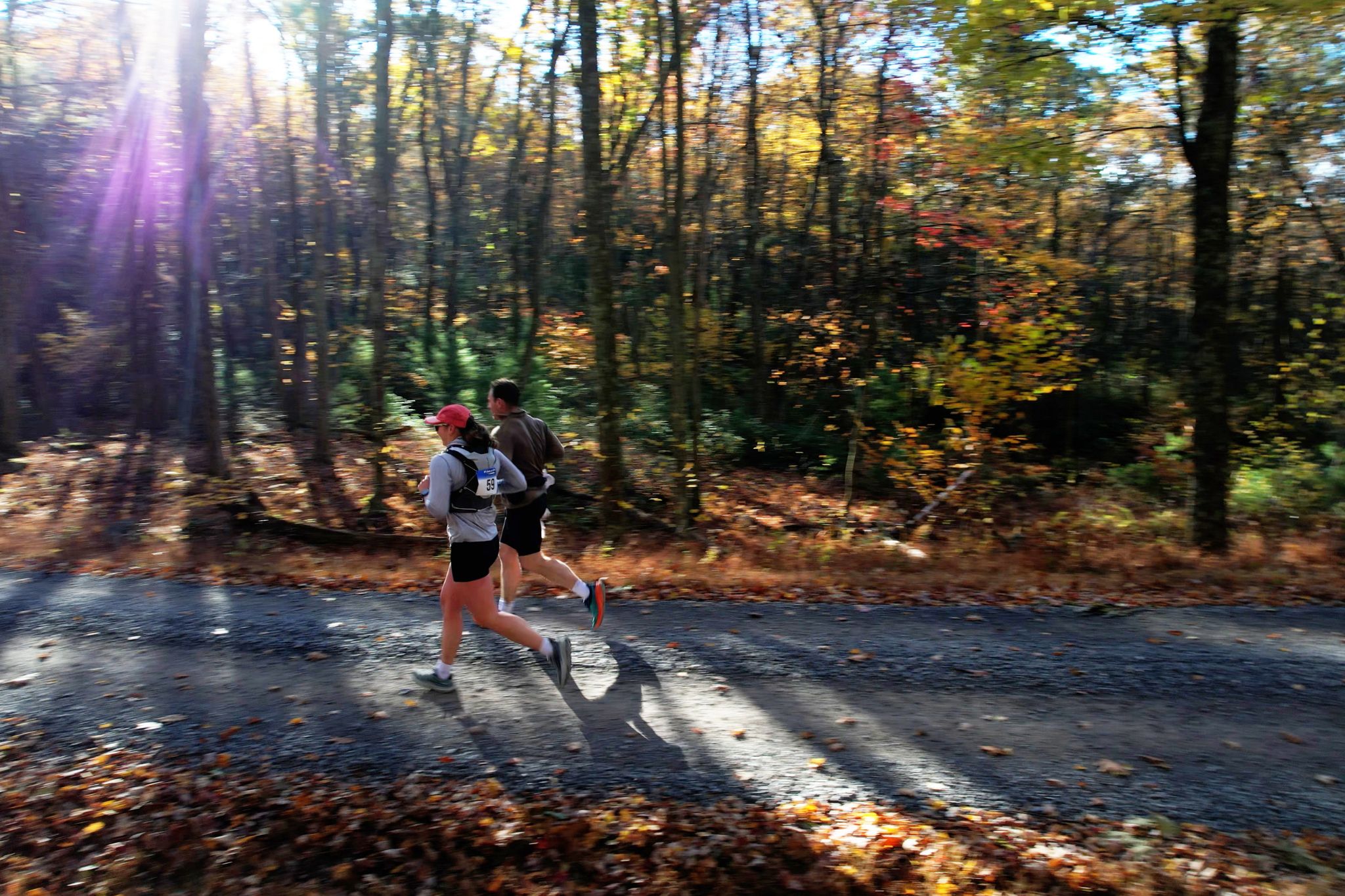
On a crisp late October evening, seasoned ultrarunners gathered for the Tussey Mountainback 100-mile race in Pennsylvania’s Rothrock State Forest, strategically scheduled to begin after hunting hours. The timing reflects both a respect for local traditions and the logistics of operating a large-scale endurance event in such a diverse terrain. The Tussey Mountainback is known for its challenging courses, including its flagship 50-miler which has been run 26 times since its inception in 2000. The addition of the 100-miler in 2024 offers participants a unique exploration of both night and day variations along the same route, during which runners experience a substantial range of elevation changes across varying surfaces.
In 2024, runners navigated a certified loop that included both night and daylight sections. However, in 2023, a new format was introduced for the 100-mile event, allowing competitors to run four shorter loops before transitioning to the more expansive, iconic 50-mile course. This change is intended to enhance both simplicity and safety, particularly for those tackling their first 100-mile challenge.
Temperatures during the race dipped into the low 30s, which presents challenging conditions for hydration strategies, particularly for those unfamiliar with running in colder climates. Runners like Georgetta Frederick, who had previously completed the 50-miler twice, approached the 100-miler with a strategic run-walk ratio, closely monitoring her energy levels and adjusting her pace according to the terrain. Runners often find that maintaining a structured pacing strategy is crucial in ultra events, allowing for sustainable endurance over the grueling distance.
Nik Suckinos, a local who set a new course record for the updated 100-mile route, emphasized the critical nature of pacing and energy management. His strategy incorporated power hiking on ascents to conserve energy, running on flat and downhill sections, and remaining mentally focused despite the inevitable fatigue that plagues ultrarunners. The mental aspect of ultrarunning can be as demanding as the physical; Suckinos noted overcoming the mental barriers of fatigue and sustaining motivation as they progressed through the night.
Similarly, Phil Perkins, the winner in the master’s category, effectively employed a run-walk strategy at a 12-minute pace, relying heavily on calorie-dense, portable nutrition. Perkins’s choice to fuel primarily with candy underscores the diversity of fueling strategies among elite ultrarunners, as each athlete must experiment to identify methods that align with personal digestive comfort and energy needs throughout their event.
In the 50-mile race, competition was intense. Andrew Weir achieved a narrow victory over Julian Schima, while Bianca Pourmussa improved her performance significantly over last year, indicating an athlete’s potential for improvement through experience and training adjustments. Pourmussa’s acknowledgment of the frequent aid stations highlights the importance of logistical support in ultra-races, a factor that can greatly affect pacing and psychological states during long events.
Master’s women’s finisher Danielle Barney found the unpaved sections of the course uniquely challenging, demonstrating how experience across varied terrains can equip runners for the specific demands posed by mountainous courses. She noted training on the course in advance, which allowed her to mentally prepare for specific climbs, including the well-known Alan Seeger section, leveraging prior knowledge to optimize her pacing.
Ben Jones, also in the master’s category, expressed how the Tussey Mountainback provided an uncharted experience for him, stepping outside his road-running background. This transition speaks to a larger trend where athletes are exploring the benefits of diversifying their running experience to adapt to different race formats. Jones’s focus on hydration and pacing reflects sound strategies applicable to any mountain ultra, particularly as mileage increases significantly past 50k.
Meira Minard’s experience highlights the critical role of mental fortitude and an appreciation for the surroundings in ultrarunning. She aimed to run faster while engaging with her environment, embracing the beauty of the course as a buffer against fatigue. This mindset resonates with many seasoned ultrarunners, signaling that mental strength is an essential aspect of performance.
In contrast, Richard Koubek noted how his preparation was shaped by the terrain’s demands, revealing that successfully navigating the elevation profile of the 50k requires an understanding of the course’s nuances and careful pacing early on. His recognition of missed hill training illustrates how vital specificity in preparation is for runners seeking to excel in mountain-based races.
As the race director transitions into a new leadership dynamic, it will be interesting to observe how the Tussey Mountainback evolves. Established races often benefit from the infusion of fresh perspectives while maintaining their core attributes, a balance that can impact the strategy for both seasoned and new competitors. The reliability of the event’s organization, pointed out by multiple runners, serves as a reminder of the vital role that race directors and support structures play in the overall success of ultra events.
The takeaway from the Tussey Mountainback is clear: familiarity with course specifics and effective energy management strategies are fundamental for success in challenging mountain ultras. Athletes are encouraged to combine pacing tactics with an understanding of the course’s topographical nuances in their preparation, ensuring they can contend with both physical and mental hurdles effectively. As the ultrarunning landscape grows more complex, these strategies are essential for any runner looking to improve their performance.
