


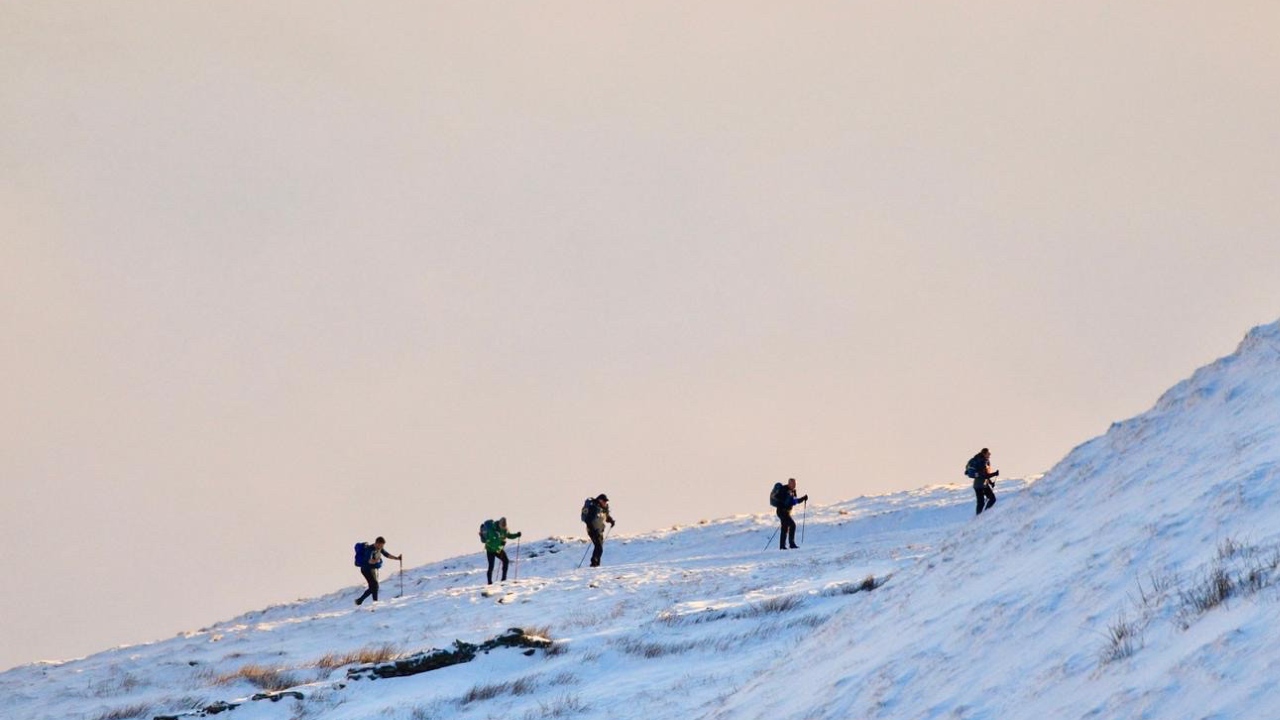
The Montane Winter Spine Race, regarded as one of the most arduous ultramarathons in Britain, continues to demand rigorous preparation and strategic planning for experienced trail runners. This year, the race will maintain its tradition of navigating the 268-mile route from Edale, located in the Peak District, to Kirk Yetholm on the English-Scottish border. As the event approaches, it is crucial for runners to evaluate both the physical and logistical components of their racing strategy, especially given the extreme weather conditions expected in winter. Competitors will face low temperatures, with the mercury forecasted to hover around freezing, necessitating a meticulous approach to gear selection to ensure warmth and mobility.
Having started in 2012 with just 11 participants, the race has consistently grown in stature, boasting an impressive field of seasoned ultrarunners this year. Notable entries include John Kelly, a past winner with extensive experience on the Pennine Way, and Claire Bannwarth, a formidable competitor who has showcased remarkable consistency in prior editions. Both athletes bring strategic insights from their previous performances, emphasizing terrain navigation, pacing, and the critical nature of mental resilience in long-distance formats. As the race requires competitors to sleep at their discretion, it becomes imperative to manage fatigue wisely, as improper sleep strategies can jeopardize race outcomes.
Furthermore, the anticipation builds as race organizers implement a new time limit starting in 2027, reducing the completion window by 12 hours to just six-and-a-half days. This alteration raises the stakes, compelling runners to reassess their pacing plans throughout the race, particularly when coupled with forecasts suggesting potential snow accumulation. Experience reveals that a solid footing can significantly aid in maintaining a steady pace on challenging terrains typical of the Pennine Way, from the rocky cliffs of the Yorkshire Dales to the unforgiving expanses of Northumberland National Park.
Central to success in this race is the competitor’s ability to adapt to changing conditions. Experienced ultrarunners are advised to incorporate a variety of trail scenarios into their training to enhance dexterity in diverse terrain types and weather variations. The recent record set by Jack Scott in 2024—achieving an astounding total time of 72 hours, 55 minutes, and 5 seconds—serves as a benchmark for prospective participants. Adopting Scott’s approach may involve concentrating on optimal nutrition and hydration strategies, which can facilitate sustained energy levels during the grueling segments of the race.
The race’s unprecedented combination of elevation gain, exceeding 10,732 meters, necessitates thorough preparation for steep ascents and descents, ensuring that cardiovascular conditioning aligns with leg strength training. Runners are encouraged to focus on hill repeats and long-distance runs, incorporating cross-training to develop core stability—vital for maintaining form on long descents to reduce the risk of injury.
Another strategic consideration is gear innovation. With advancements in trail running equipment, including lighter packs, weather-resistant fabrics, and smart gear incorporating GPS functionalities, competitors must stay abreast of the latest trends. The emphasis should always be on finding a balance between weight and reliability; ultrarunners know that every ounce counts when covering such grueling distances. Adequate layering, a lightweight sleeping system, and nutrition options must be tested thoroughly during training to ensure they facilitate rather than hinder performance on race day.
As anticipation reaches its peak ahead of the Winter Spine Race, strategic thinking becomes paramount. Successful completion demands not only a physical robust training regime but also an adaptable strategy to manage the multifaceted challenges posed by winter ultrarunning.
Ultimately, the significant takeaway for experienced runners preparing for mountain ultras is clear: a comprehensive understanding of both the physiological and logistical demands of your chosen race will empower you to execute your plan effectively, while remaining adaptable to race-day uncertainties. The capacity to strategically tackle terrain variations, weather impacts, and mental fatigue can often distinguish the finisher from the contestant.
