


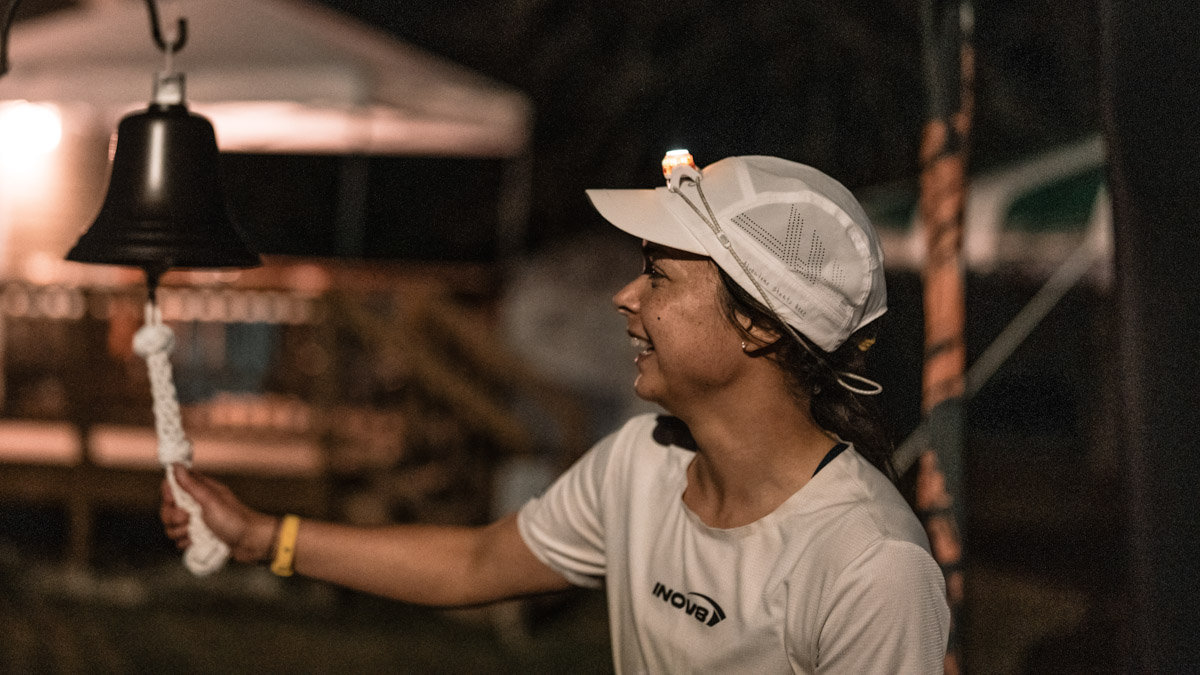
At the recent 2025 Big Dog’s Backyard Ultra in Bell Buckle, Tennessee, Sarah Perry of the U.K. achieved a significant milestone by setting a new women’s record for backyard ultramarathons, completing 95 “yards,” which translates to 395.8 miles (637.0 kilometers). This impressive feat surpassed the previous women’s record of 87 yards (362 miles or 583.3 kilometers) set by Megan Eckert from the U.S. in 2024, marking an increase of eight laps and 33.3 miles (53.6 kilometers) over the prior benchmark. As the race unfolded over 95 hours of continuous effort, Perry ultimately withdrew due to back pain, leaving nine male competitors to continue.
The backyard ultra format, conceptualized by Gary Cantrell, also known as Laz of Barkley Marathons notoriety, tasks runners with completing laps of a 4.1667-mile (6.705 kilometers) course. Each lap begins on the hour, and competitors must return to the start corral within that timeframe, regardless of their speed. The race format has garnered a global following, establishing the Big Dog’s Backyard Ultra as a premier event within this niche. The track alternates between trail running during daylight and road laps at night, adding a unique layer of strategy in pacing and terrain adaptation.
This year’s race featured 75 participants from 40 nations, including both current and former record holders. Among the women, the field included previous champions like Eckert, who had set the 2024 record and demonstrated consistent performance by finishing 92 yards (383.3 miles or 616.8 kilometers) this year. Notably, Jennifer Russo, the oldest competitor at the age of 59, completed 52 yards (216.6 miles or 335.2 kilometers) before deciding to withdraw. Meanwhile, Edit Fűrész from Hungary covered 76 laps (316.6 miles or 509.6 kilometers), allowing only Eckert and Perry to progress further.
Perry’s journey through the race reflects her extensive background in ultra-endurance events, starting with her victory at the Backyard Ultra Cymru in 2021. She subsequently demonstrated her capability by claiming the overall title again in 2022 at the Cow Shed Backyard Ultra, completing 33 laps (137.4 miles or 221.2 kilometers). Additionally, her qualification for this year’s Big Dog’s Ultra came from her performance at the U.K. Backyard Ultra World Team Championships, where she completed 59 laps (245.8 miles or 395.6 kilometers).
While Perry was still maneuvering through her laps with strong cadence, her decision not to commence the 96th lap showcases the importance of listening to one’s body in ultramarathon scenarios, particularly in multi-day events where fatigue and injury can accumulate over time. This decision not only reflects an understanding of personal limits but also emphasizes a strategic approach to race management, allowing her to exit the race positively, with a new U.K. record to her name.
Among the remaining male competitors, Phil Gore from Australia clinched the win with a remarkable 114 laps (475 miles or 764.4 kilometers). His achievement, while falling short of his own record of 119 laps (495.8 miles or 797.9 kilometers), highlights the high level of competition within the event. Ivo Steyaert also put forth a strong performance to finish with 113 laps (470.8 miles or 757.7 kilometers), illustrating the collaborative spirit and pressure that such races cultivate.
As the landscape of ultra-endurance events continues to evolve, the backyard ultra format has proven to be a compelling test of mental fortitude and physical resilience. Events like the Big Dog’s Backyard Ultra not only push the limits of individual performance but also foster community among ultrarunners. Athletes today can take cues from Perry’s approach, as well as those of other seasoned competitors, to refine their own strategies.
In terms of training for similar mountain ultras, this race reiterates the necessity of adapting to diverse terrain and unpredictable elements, such as transitions from trail to road. This requires dedicated training not only on consistent footing but also across varied landscapes to simulate the changing conditions. Understanding the importance of pacing—particularly how to manage energy across a lengthy event—becomes paramount. Perry’s experience underlines that even elite athletes must weigh their performance against their physical signals and make strategic decisions about when to continue or conserve their strength.
For seasoned ultrarunners preparing for mountain races, the most enduring takeaway from the 2025 Big Dog’s Backyard Ultra is the value of listening to one’s body and knowing when to push and when to hold back. Success in ultrarunning hinges not only on physical ability but also on astute self-awareness and tactical decision-making as athletes navigate the complexities of endurance racing.
