


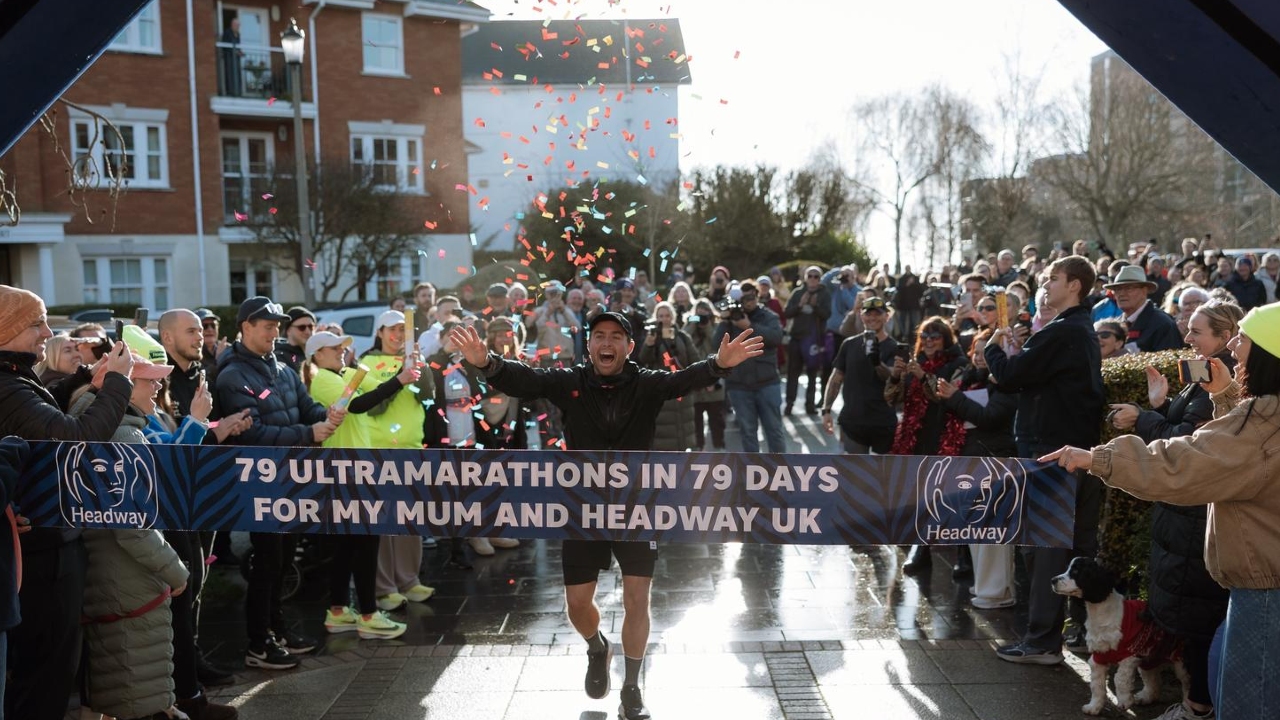
In recent months, the ultrarunning community has witnessed significant achievements and shifts, notably through Sam King’s extraordinary completion of 79 ultramarathons in 79 consecutive days. While the headlines might focus on the sheer endurance of this remarkable feat, there are critical insights applicable to experienced trail and ultrarunners preparing for mountain races of varying distances.
King undertook his challenge to raise awareness and funds for the Headway charity after a personal family experience of his mother’s near-fatal brain bleed. This context underlines a unique motivational drive, but more importantly, it highlights the strategic thinking behind the undertaking. Initially, King aimed for 74 ultramarathons, representing each year of his mother’s life prior to her health issue. However, he extended this to 79, showcasing the necessity to remain adaptable and responsive to evolving circumstances both psychologically and logistically.
A key element of King’s approach was his focus on the day-to-day process rather than fixating solely on the finish line. This strategy resonates with experienced ultrarunners accustomed to training under varied conditions and recognizing the mental demands of endurance sports. By concentrating on completing each daily run—each 50 kilometers—he sustained a tactical mindset that helped him navigate through fatigue, injuries, and unpredictable weather. Such an approach is applicable for runners training for challenging mountain races where weather and terrain can change quickly. This call to remain present and responsive not only aids mental resilience but also informs pacing and energy management throughout a race.
Additionally, King emphasized the importance of community and support. Although he noted a desire for a low-key finish—and was indeed surprised by the turnout—this reflects a reality in endurance sports: the impact of social support networks. Engaging with the community, whether during training or on race day, contributes to mental fortitude and can enhance performance. Runners planning for mountainous ultras should consider optimizing their own networks, not only for training partners but also for logistical support during events.
Looking beyond personal achievement, King’s record challenge intersects with broader trends in ultrarunning, especially concerning world record benchmarks and fundraising initiatives tied to social causes. King was aware of the world record for consecutive ultramarathons, but his focus remained aligned with personal goals rather than purely competitive aspirations. This gentle reminder underscores the significance of purpose in training: serving as a pertinent consideration for runners who may pursue performance goals alongside charitable endeavors. Such dual objectives can serve as powerful motivators, providing a framework within which to navigate tough training cycles.
King’s experience is further enriched by his evolution from a past where he was a higher-ranked player in eSports—specifically Call of Duty—to his current identity as a serious ultrarunner. This transition highlights how varied backgrounds can inform one’s approach to endurance sports. For runners in the mountains, embracing a diverse skill set may lead to innovative strategies in managing not just the physical aspects of running, but also the psychological components of competition and endurance.
Furthermore, the emotional journey throughout King’s ultramarathons, especially on his 80th day when he ran even after achieving his fundraising goal, showcases a nuanced understanding of emotional regulation in sports. Runners training for competitive mountain races can take note of the psychological states that arise post-challenge, and how allowing oneself to feel and process can lead to clarity. This instance of reflection can bolster future training decisions, fueling motivation and a deeper comprehension of personal limits.
Crucially, King’s journey also echoes the need for rigorous preparation. The initial target and eventual extension of his ultramarathon series demonstrate the value in planning and flexibility. For experienced runners, ensuring robust training plans that allow for potential increases in difficulty—be it through unplanned race extensions or heightened conditions—is a valuable strategic layer. Incorporating hill repeats, altitude training, and recovery strategies can prepare athletes for unpredictable race demands.
As the ultrarunning landscape continues to evolve, including fulfillment of qualifying races for iconic events such as UTMB, runners need to stay informed on updates regarding course changes and gear innovations. King’s narrative serves as a reminder that successful outcomes are often rooted in thorough preparation paired with a flexible mindset. Runners must remain vigilant and adaptable, not only in recognition of their own limits but also in how external conditions may shift in a mountain race scenario.
In summary, as ultrarunners prepare for the challenges of mountain races, maintaining a focus on daily performance strategies while balancing community support and emotional awareness is paramount. Sam King’s experience exemplifies the intricate interplay of discipline, adaptability, and purpose, serving as a valuable reference point for all aiming to navigate the demanding landscape of ultrarunning. Ultimately, embracing the journey—both its challenges and remarkable accomplishments—is what shapes effective, informed strategies for mountain ultra racing.
