


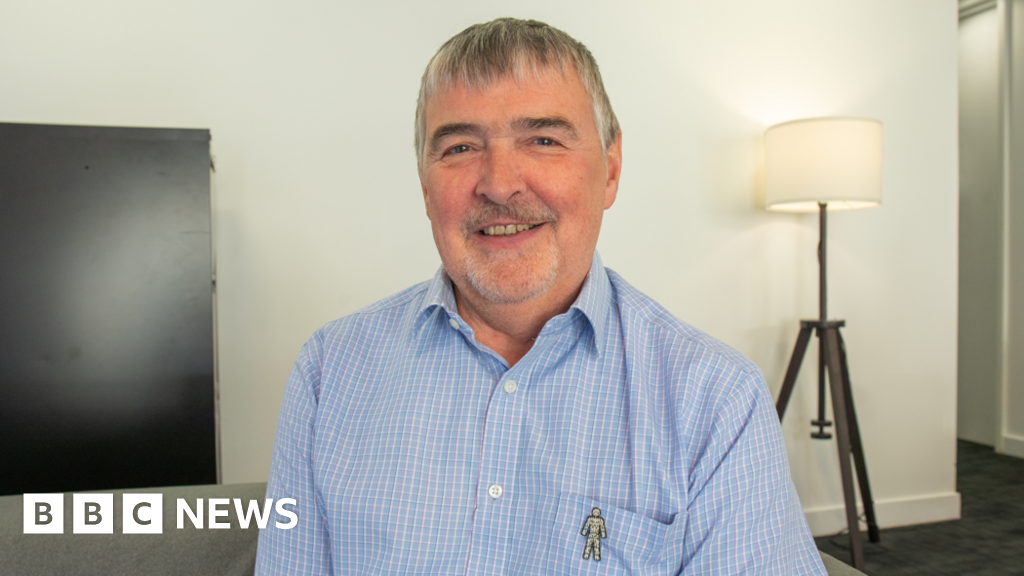
Tony Collier, a 68-year-old marathon runner from Altrincham, Greater Manchester, embodies the essence of endurance—both physically and mentally. By the age of 50, having already completed 19 marathons, he was well-versed in the commitment and determination required for distance running. His journey, however, took an unexpected turn when a groin strain led him to seek medical advice at the age of 60. It was during this visit that he encountered a profound challenge: a diagnosis of incurable prostate cancer.
For seasoned endurance athletes, the notion of facing a formidable obstacle isn’t new. Adversity is often intertwined with training—be it navigating injuries, overcoming mental hurdles during a race, or grappling with the rigors of endurance events that test physical limits. As Tony entered the doctor’s office, he was focused on recovering from that groin strain, unaware that he would soon be confronted with a reality that would redefine his purpose and perspective.
Within days of the MRI that revealed abnormalities, Tony learned that he had been living with the cancer for a decade, undetected. This stark revelation was not just a piece of medical information; it was a reframe of his journey. Endurance sports teach us the importance of pacing, strategy, and mental fortitude. Tony found himself in a race against time, echoing the challenges faced on the marathon course where every mile tests one’s resolve.
His experience serves as a reminder of the value of proactive health management, much like training schedules that keep athletes at peak performance. Just as runners track their mileage, energy levels, and recovery, there’s a crucial aspect of self-awareness that extends beyond the physical strain and into the realm of personal health. Tony’s realization that he had the right to a PSA test from the age of 50 illustrates a vital lesson: awareness ensures we stay one step ahead of potential setbacks. It’s akin to knowing when to listen to fatigue signals or when to rest so that the body can adapt and respond effectively.
Many endurance athletes become highly attuned to their bodies; however, a disconnect can exist in understanding the importance of preventive health measures. The conversation around proactive screenings—like the PSA test—is as significant as understanding optimal hydration or energy management during long distance events. Tony expressed that had he been aware of his right to the test, he could have detected his cancer earlier, changing the trajectory of his life. This acknowledgment parallels an athlete realizing the need to adjust training based on fluctuations in performance or health.
In a sport that often celebrates bold feats and triumphs against the odds, Tony’s narrative takes us deeper into the mental landscape of resilience. It’s not solely about enduring through the miles but also about navigating life’s unpredictable terrains. The struggle between securing health and engaging in the passion of running can be a delicate balance. The drive to train, to push through discomfort, is often faced with the reality of unforeseen challenges that demand new strategies.
Tony’s commitment to marathons reflects a broader appreciation for community found within endurance sports. Shared experiences of training, racing, and the relentless pursuit of personal bests build bonds among athletes. This interconnectedness is vital, as seen in the realm of prostate cancer awareness. Prostate Cancer UK advocates for greater education and screening; a community effort to ensure that no one else endures a journey similar to Tony’s is a challenge embraced collectively.
In the competitive sports world, we often focus on individual performance, yet it’s essential to remember the vulnerability that accompanies every athlete. The psychological aspect of dealing with health issues can be daunting, potentially pulling an athlete into a state of uncertainty. The mental resilience that comes from training hard can be leveraged in the fight against illness. Tony’s reflections capture the essence of this resilience, not merely as a series of physical challenges but as an emotional and strategic confrontation with life.
As endurance athletes, it’s our nature to confront discomfort head-on. We learn to pause, recalibrate, and adapt. Yet, in the face of health challenges, it’s okay to allow ourselves the grace to step back, reassess, and seek knowledge and support. Rather than rushing through the next mile or race, there’s wisdom in slowing down to consider our holistic health and well-being.
Tony’s story encapsulates the importance of nurturing our bodies, minds, and spirits, regularly engaging in conversations about health that can impact our futures. For many of us, the notion of “pushing through” is not just about the endorphins or the finish lines but also ensuring we’re adequately equipped to face life’s hurdles—on and off the course.
As you prepare for your next long session, remember to pace not just your legs, but your entire being. In the grueling moments of your race or training, reflect on the lessons of awareness and the importance of proactive health management. Embrace the journey, knowing that taking moments to reassess your health can be just as vital as enduring every mile. Your resilience in body and mind is not just tested in races, but in the commitment you make to your overall well-being.
