


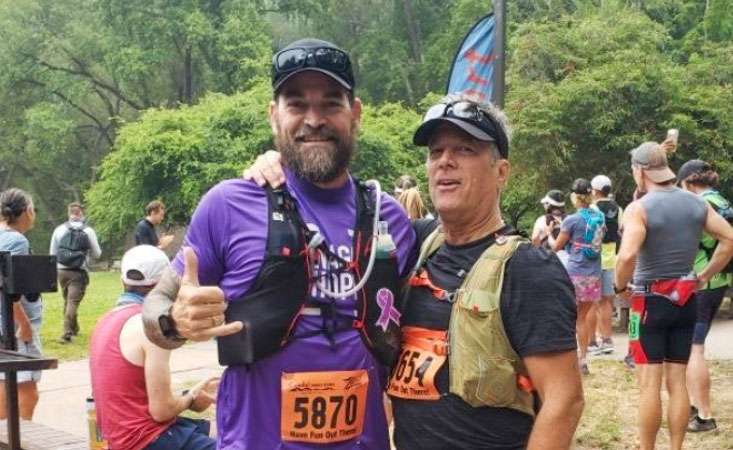
In June 2018, I found myself on the verge of a significant life transition. At 47, with a 10-year-old daughter and a wedding just two months away, I was gearing up for an ambitious goal: to run a 50-mile ultramarathon for my upcoming 50th birthday. I had trained diligently, logging about 40 miles a week, losing weight, and feeling great—until my body began sending me subtle but concerning signals.
As seasoned endurance athletes know, our bodies can be both our greatest asset and our most formidable opponent. This relationship can be easily taken for granted. I was experiencing digestive issues and fatigue that I attributed to my rigorous training. Having spent years pushing through physical discomfort, I brushed aside these symptoms, convinced they were just byproducts of ramped-up mileage and caloric deficits. Even as my wife, Pandora, urged me to consult a doctor, I resisted the idea. Like many athletes, I felt a sense of invincibility—a belief that I could out-train any challenge, physical or otherwise.
The conversation we have with ourselves during training or racing often involves a deep understanding of our capabilities, limits, and the resilience we possess. Yet, in my experience, this same internal dialogue can become a double-edged sword. It’s essential to listen to the fine line our bodies walk; the difference between pushing through discomfort and recognizing deeper issues is crucial.
Eventually, I caved in to Pandora’s insistence and made an appointment. I anticipated an easy dismissal from the doctor. Instead, I discovered that I was jaundiced—a sign I had overlooked amidst my training routine. Just as in racing where the pace can suddenly ask for a gear change, my body had slapped me with an urgent reality check. A CT scan revealed a tumor on my pancreas, leading to a diagnosis of stage III pancreatic cancer. In one swift moment, my physical endurance was tested far beyond the finish lines I had previously imagined.
The road that followed involved extensive treatments: chemotherapy, surgery, and radiation. Each step became a new layer of adaptation, both mentally and physically. Pacing, familiar to endurance athletes, took on a new urgency. I realized the importance of balancing my efforts. The spirit of endurance was less about relentless forward motion and more about strategic recovery and resilient mindset. The challenge wasn’t just my body; it was a mental battle too.
My commitment to maintain my health was steadfast—I showed up for every one of my chemotherapy treatments and embraced exercise not just as a routine, but as a necessary tool for resilience. Regular activity strengthened my immune system, bolstered my mental fortitude, and spurred the endorphins that often carried me through difficult workouts or races. The recovery period between treatments became as important as any training cycle. I learned that a slightly slower pace, whether in the form of light walking or gentle stretching, was essential for recovery.
Post-surgery, I witnessed how being in good shape made a tangible difference in my treatment. The doctor expressed that my physical condition facilitated the surgical process. This critical insight reaffirmed the value of preparation and having a robust fitness base, especially during tumultuous times. Just as in racing, where strength and endurance help everything from steep ascents to speedy finishes, my training had laid a foundation that had now become an asset in the fight for my health.
As I moved through radiation, I focused not only on my physical being but on my mental landscape as well. I connected with the community around me, engaging in support groups and enduring outreach events like PurpleStride, where participants gather to honor pancreatic cancer awareness, connecting with others who’ve crossed similar treacherous paths. This community shared lessons on resilience, reminding us that the journey often extends beyond the individual, reflecting the collective endurance we share as athletes.
When I participated in my first 50K ultramarathon post-diagnosis, it felt symbolic. It wasn’t the 50-mile race I’d envisioned, but the 31 miles I conquered that day spoke volumes. Acknowledging any finish line can serve to validate those small milestones we achieve along the way. It’s much like finishing a tough workout; while the distance might not be what you initially aimed for, it carries an intrinsic value born from persistence, strategy, and community support.
As endurance athletes, we thrive on the challenges we create for ourselves, and we embrace the mental and physical hurdles that come with pushing our boundaries. My journey underscores that those hurdles may not always come in the form we expect; sometimes they arrive disguised as health setbacks or unforeseen circumstances. Yet, it’s in how we respond to those challenges—how we adapt, recover, and pace ourselves—that reveals the true essence of endurance.
In reflection, the takeaway is clear. As athletes, we often pride ourselves on our ability to power through adversity, to jam up against barriers and push them down. But true strength lies in listening—to ourselves, to our bodies, and to the guidance we receive from those who care. So the next long session you tackle, take a moment to check in with yourself on a deeper level, beyond the physical strain, and appreciate the art of pacing—both in training and in life.
